When a shock absorber leaks, it’s already past the early warning stage. At that point, the damper has lost its ability to control motion, not just smooth the ride.
In the shop, leaking shocks usually show up after customer complaints—nose dive, loose handling, or a vehicle that suddenly feels unstable on cold mornings. Once oil leaves the shock body, heat control and damping force drop fast. From there, braking stability, steering response, and tire wear all begin to suffer.
This isn’t a comfort issue. It’s a control problem.

Bottom line first: oil outside the shock means the seal has failed.
Every shock relies on hydraulic oil moving through internal valving to manage spring energy. That oil stays sealed under pressure through thousands of cycles. When it escapes, damping force goes with it.
This is why a car that felt fine through summer suddenly feels wrong in winter. Cold thickens fluid, stiffens seals, and exposes components that were already marginal. Once the seal gives up, the shock can’t recover.
Shock seals don’t fail overnight. Heat cycles, friction, and age slowly harden the rubber until it loses elasticity. High-mileage vehicles and fleet units see this first. Add degraded or contaminated oil, and seal failure accelerates.

It only takes one nick. Road debris, winter grit, or careless tool contact during installation can scratch the piston rod. Every stroke drags that imperfection across the seal, cutting it until oil starts leaking.
As internal valving wears, pressure control becomes inconsistent. The shock still moves, but pressure loads spike instead of staying balanced. That pressure hammers the main seal until it finally gives way, often after a rough season or heavy-duty use.
Shock oil breaks down over time. Microscopic metal particles and moisture turn it abrasive. In real-world use, contaminated oil acts like liquid sandpaper, grinding seals from the inside until leakage starts.
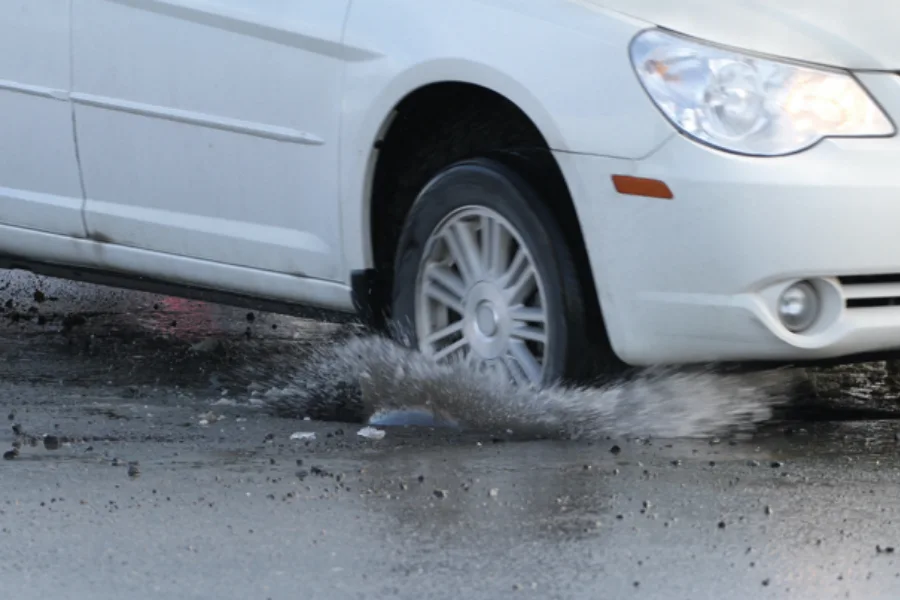
Potholes, curb strikes, and rough roads deform housings and stress rods. Salt and moisture pit metal surfaces. Heavy loads and constant vibration overheat fluid. None of these cause instant failure, but together they shorten shock life fast.
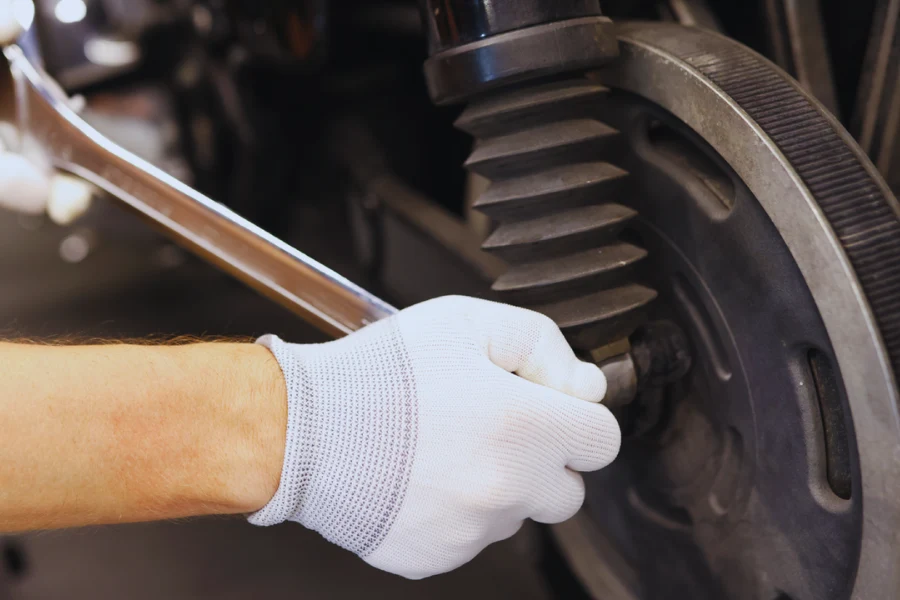
This is one of the most common comeback causes. Gripping the piston rod with tools, over-torquing mounts, or installing with misalignment distorts the shock body or damages sealing surfaces. The leak might not show immediately, but it always shows up.
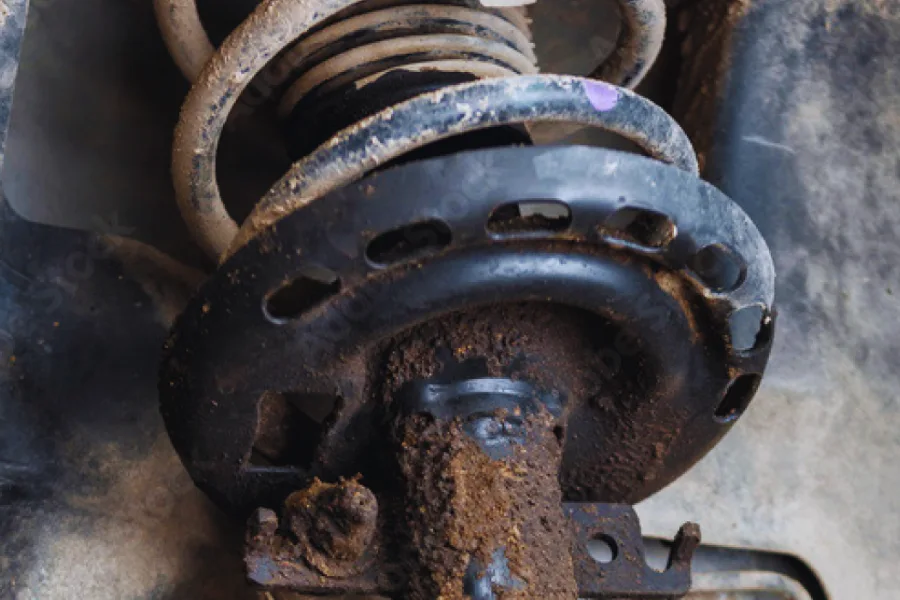
Visible oil on the shock housing is the clearest sign. By the time you see it, damping performance is already compromised.
A healthy shock stops motion quickly. A leaking shock lets the spring keep working. If the vehicle continues to bounce after a bump, damping force is already gone.
Front shock leaks show up here first. Weight transfer spikes, the front end drops, and brake control becomes inconsistent.
Steering response slows, and the vehicle leans more than it should. This is classic under-damped behavior.
Weak damping prevents consistent tire contact with the road. Cupping and uneven wear patterns follow, especially on highway-driven vehicles.
Noise usually appears later in the failure cycle, once oil loss reduces internal control and components begin to move unchecked.
| Front Shock Leak | Rear Shock Leak |
|---|---|
| Pronounced nose dive under braking | Excessive rear bounce over bumps |
| Slower steering response | Floaty feel when loaded |
| Noise near front wheels | Rear sag or visible lean |
| Oil on front shock body | Oil inside rear wheel arch |
A leaking shock doesn’t strand the vehicle, but it quietly removes safety margin.
Stopping distances increase. Steering precision drops. Tires and brakes wear faster. Other suspension components take loads they weren’t designed to handle. What starts as a single failed damper often turns into a system-level repair.

Not every fluid near a wheel is shock oil. Brake fluid or power steering leaks can look similar. Always verify the source before ordering parts.
Once the seal fails, the shock is done. There is no reliable way to reseal or refill a leaking shock. Replacement is the only correct fix.
Replacing one shock creates imbalance. Always replace both units on the same axle to restore predictable handling and braking behavior.
Seal material, oil stability, and piston rod finish determine how long a shock survives real-world abuse. This same durability-first mindset is why manufacturers focused on vibration and tension control, such as SUMATE, emphasize material quality and system reliability to reduce comebacks.
Inspect springs, mounts, control arms, dust boots, and bump stops. Fixing one weak link without checking the system often leads to repeat failures.
Is it safe to drive with a leaking shock absorber?
No. A leaking shock reduces damping force, which affects braking control, steering stability, and tire contact. While the vehicle may still move, stopping distances increase and handling becomes unpredictable. Continued driving also accelerates wear on tires, brakes, and suspension components, turning a single failure into a broader safety and repair issue.
What should you do if a shock absorber is leaking?
First, confirm the fluid is coming from the shock and not another system. Once verified, the shock must be replaced—leaking units cannot be repaired. Replace shocks in pairs on the same axle to maintain balance, and inspect related components like mounts, springs, and bump stops during the repair.
Can I replace just one shock absorber?
Replacing only one shock is not recommended. A new shock paired with a worn or leaking one creates uneven damping, which affects handling and braking stability. For proper control and predictable vehicle behavior, shocks should always be replaced in pairs on the same axle.
Can a leaking shock absorber be repaired?
No. Once a shock absorber begins leaking, the internal seal has failed and damping performance is compromised. There is no reliable way to reseal or refill a shock. Replacement is the only correct and safe solution.
What symptoms usually show up first with a leaking shock?
Early signs include oil residue on the shock body, excessive bouncing after bumps, and increased nose dive during braking. As the leak worsens, handling becomes loose, body roll increases, tire cupping appears, and knocking noises may develop over rough roads.
Is light oil mist on a shock absorber normal?
A light oil mist can be normal, especially on high-mileage shocks, as the piston rod carries a thin film past the seal. However, visible oil streaks, wet shock bodies, or fluid actively running down the housing indicate seal failure and require replacement.
Is wheel alignment needed after replacing leaking shocks?
Yes. Replacing shocks can change suspension geometry, especially on strut-equipped vehicles. A wheel alignment helps restore proper tire contact, prevents uneven wear, and ensures the new shocks work correctly with the rest of the suspension system.
A leaking shock absorber is not a gray-area diagnosis. It’s a clear failure signal.
Replacing shocks in pairs, using durable components, and thinking in terms of the full suspension system restores control and prevents secondary damage. Tools help, but experienced judgment and reliable parts—built with long-term durability in mind, like those from SUMATE—are what keep vehicles stable in the real world.