Facebook

WELCOME TO OUR BLOG

We're sharing knowledge in the areas which fascinate us the most
click

How to Stop Car Windows from Fogging Up

By Lucas8283 March 11th, 2026 84 views

On a cold winter morning, you start the car and the windshield instantly turns cloudy. Visibility drops, the heater is running, and drivers instinctively wipe the glass with their sleeve.

Every technician has seen this problem before. Fogged windows aren’t random — they follow a predictable pattern inside the vehicle.

The root cause is simple: warm, humid cabin air meets cold glass. Once that temperature gap appears, condensation forms almost immediately.

Understanding how that happens makes it much easier to stop it.

Why Car Windows Fog Up in Cold Weatherwhy car windows fog up condensation forming on cold windshield glass

Fogging is caused by condensation.

Warm air holds moisture. Cold glass cannot.

When warm cabin air touches a cold windshield, water vapor turns into tiny droplets on the surface of the glass.

That thin layer of droplets scatters light and creates the cloudy film drivers see.

On winter mornings, this happens fast because windshield glass can drop well below cabin temperature overnight.

Common moisture sources inside a vehicle

Technicians often trace fogging back to hidden humidity inside the cabin.

Typical sources include:

  • Wet boots or snow melting into floor mats

  • Damp jackets or umbrellas left in the car

  • Passengers breathing in a closed cabin

  • Spilled drinks or moisture trapped in carpets

  • Water leaks from door seals or windshield seals

When the vehicle warms up, that trapped moisture evaporates into the air. The first cold surface it meets is the windshield.

That’s when the fog appears.

How to Clear Fogged Car Windows Quickly

When the glass fogs up, the fix always comes down to two things:

remove moisture and stabilize the temperature difference.

The vehicle’s HVAC system is designed to do exactly that.

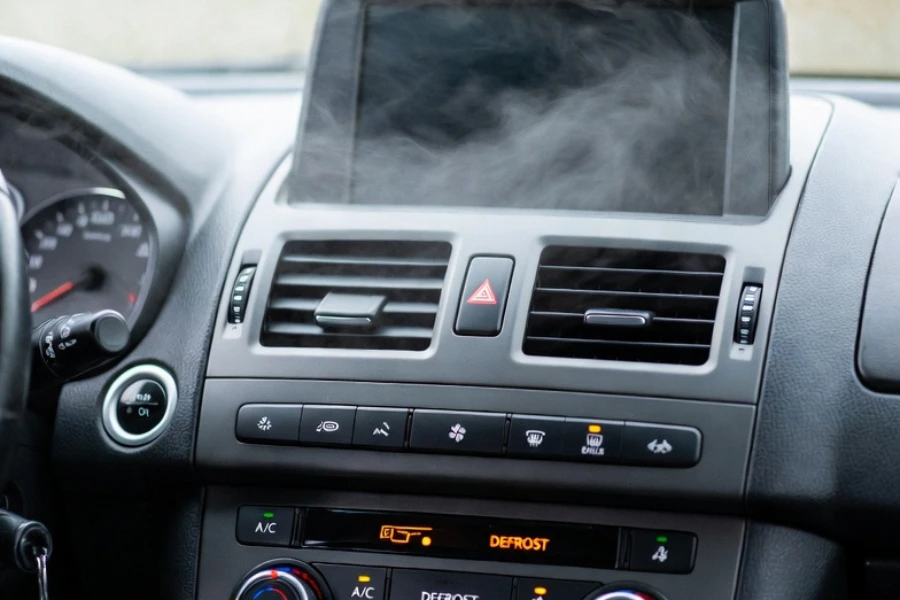
Use the defrost mode

The defrost setting is the fastest way to clear fogged glass.

Defrost mode typically:

  • directs airflow directly onto the windshield

  • activates the air-conditioning system

  • increases blower speed

This combination works for two reasons.

Warm air raises the temperature of the glass, while the air-conditioning system removes moisture from the cabin air.

Dry air hitting warmer glass clears condensation quickly.

Run the heater and A/C together

Many drivers assume air conditioning is only useful in summer.

In reality, the A/C system is one of the most effective dehumidifiers in a vehicle.

When used with the heater:

  • the heater warms the windshield

  • the A/C dries the cabin air

That balance clears fog significantly faster than heat alone.

Turn off recirculation mode

Recirculation mode keeps the same air circulating inside the cabin.

That air already contains moisture from passengers, clothing, and melting snow.

As humidity builds, fogging becomes worse.

Instead:

  • turn recirculation OFF

  • allow fresh outside air into the system

Cold outside air is usually much drier than the air trapped inside the vehicle.

That helps the HVAC system stabilize humidity.

Increase airflow

Strong airflow helps move dry air across the glass surface.

Technicians often increase the blower speed slightly during defrost.

More airflow means:

  • faster heat transfer

  • quicker moisture removal

This is especially helpful when the cabin is still cold after startup.

How to Prevent Car Windows from Fogging Uphow to defog car windows quickly using defrost mode and air conditioning

Clearing fog is helpful, but preventing moisture buildup inside the vehicle is even better.

Reducing humidity inside the cabin dramatically lowers the chance of condensation.

Keep interior glass clean

Dirty glass attracts condensation.

Oil films, dust, and residue create microscopic surfaces where water droplets easily form.

Regular cleaning reduces this effect.

Use:

  • automotive glass cleaner

  • a clean microfiber cloth

Clean glass fogs less and clears faster.

Remove wet items from the cabin

Snow and water brought into the vehicle can release a surprising amount of moisture.

Technicians often see vehicles where wet floor mats are the main cause of persistent fogging.

To reduce humidity:

  • shake snow off boots before entering

  • remove soaked floor mats

  • store wet clothing in the trunk if possible

Less moisture inside the vehicle means fewer condensation problems.

Improve cabin airflow

Proper airflow helps prevent moisture accumulation.

Check that:

  • air vents are unobstructed

  • blower airflow is strong

  • the cabin air filter is clean

A restricted cabin filter can significantly reduce defrost performance.

Replacing a clogged filter often restores airflow and improves visibility.prevent car windows from fogging up by cleaning windshield interior

When Fogged Windows Indicate a Mechanical Problem

Occasional fogging is normal in winter.

But persistent fog that refuses to clear can signal underlying vehicle issues.

Experienced technicians usually inspect a few common areas.

Clogged cabin air filter

A blocked cabin filter restricts airflow through the HVAC system.

Reduced airflow limits the system’s ability to remove moisture from the air.

Typical signs include:

  • weak defrost airflow

  • slow windshield clearing

  • musty interior odors

Replacing the cabin filter often resolves the issue quickly.

Faulty air-conditioning system

The air-conditioning system removes humidity from the air before it reaches the vents.

If the A/C compressor or evaporator is not functioning properly, moisture remains in the airflow.

When that humid air hits cold glass, condensation forms again.

In these cases, a proper system inspection is necessary.

Hidden water leaks

If fogging appears constantly, technicians often check for water intrusion.

Common leak points include:

  • worn door weather seals

  • windshield seal failure

  • blocked sunroof drains

  • heater core leaks

Any source of moisture inside the cabin can continually feed humidity into the air.

Until the leak is repaired, fogging will persist.

Why Accessory Drive Components Matter for HVAC Performance

Climate control systems rely on several belt-driven accessories, including the A/C compressor.

If the accessory drive system struggles — for example, from a worn belt or weak tensioner — system performance can suffer.

A slipping belt can reduce compressor efficiency and airflow performance, especially during cold starts when belts are stiff and loads increase.

For fleets, distributors, and repair shops, reliable drive components are critical for maintaining consistent accessory performance.

Manufacturers like SUMATE, which produces belt tensioners and belt drive components for trucks, buses, and passenger vehicles, focus on durability and stable operation across demanding conditions.

Stable belt drive systems help ensure that critical accessories — including HVAC components — continue operating as expected.

Final Thoughts

Fogged windows are frustrating, but the cause is almost always predictable.

It comes down to two factors:

  • humidity inside the cabin

  • temperature differences at the glass

The solution is equally straightforward:

  • reduce cabin moisture

  • allow fresh airflow

  • use heat and A/C together

  • keep the HVAC system functioning properly

Modern vehicle systems do most of the work. But clear diagnostics, proper maintenance, and reliable components ultimately keep everything running smoothly.

Because at the end of the day, tools and systems assist the repair — but experienced technicians and dependable parts solve the problem.

clean spark plugs to extend spark plug lifespan and improve engine performance
Previous
How to Clean Spark Plugs and Extend Their Lifespan
Read More
engine oil bottle markings explained on motor oil label in automotive workshop
Next
Engine Oil Bottle Markings Explained: What SAE, API, and OEM Specs Really Mean
Read More