Cold morning. Engine fires up, but the oil pressure takes a second too long to stabilize. The timing chain rattles briefly. A worn tensioner struggles until oil pressure finally builds.
That moment tells you everything about oil viscosity.
Many lubrication problems start long before a vehicle reaches the repair bay. The wrong oil specification can delay oil flow during cold starts, thin out under heat, or fail to support modern engine systems like turbochargers and hydraulic tensioners.
The markings on an engine oil bottle are not marketing labels. They tell technicians whether the oil can handle temperature swings, engine loads, and internal component demands.
Understanding those markings helps prevent wear, noise complaints, and repeat repairs.
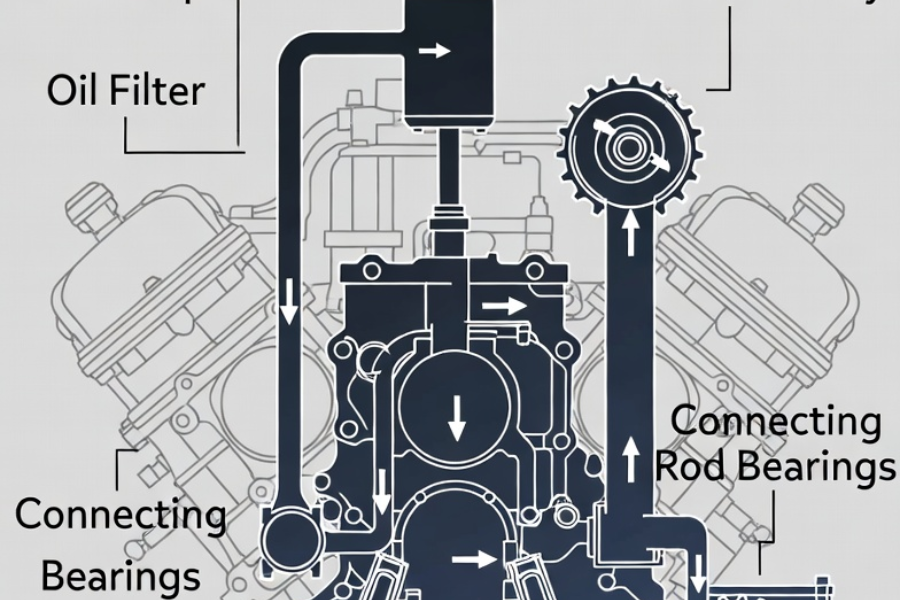
Inside a running engine, oil constantly circulates through tight clearances and high-load surfaces. It forms a protective film between moving metal parts while carrying heat and contaminants away from critical areas.
Engine oil performs several key jobs:
Reduces friction between bearings, camshafts, and pistons
Transfers heat away from combustion zones and rotating assemblies
Suspends contaminants so the oil filter can capture them
Prevents corrosion and oxidation inside the engine
Provides hydraulic pressure for timing chain tensioners and valve timing systems
Modern engines rely heavily on hydraulic systems. Timing chain tensioners, variable valve timing units, and turbocharger bearings all depend on stable oil pressure and consistent lubrication.
When the oil specification is wrong, these systems often reveal the problem first.

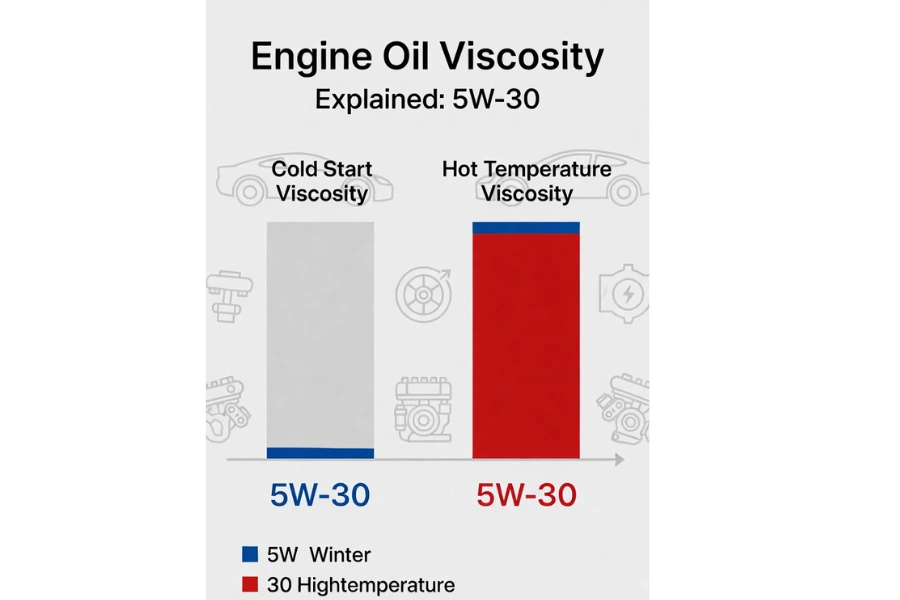
The most recognizable marking on an oil bottle is the viscosity grade, such as 5W-30 or 10W-40. These ratings follow standards defined by the Society of Automotive Engineers (SAE).
They describe how oil behaves in cold conditions and when the engine reaches operating temperature.

The first number, followed by W for winter, describes how easily the oil flows in low temperatures.
Lower numbers mean the oil flows faster during cold starts.
Examples:
0W oil flows quickly in freezing conditions
5W oil works well in most winter climates
10W oil flows more slowly during cold starts
Cold viscosity directly affects startup lubrication.
When oil is too thick during cold weather:
Oil pumps work harder
Oil pressure builds slowly
Bearings run briefly without full lubrication
Hydraulic tensioners collapse and produce startup noise
Technicians often notice this as a brief chain rattle or ticking noise after a cold start.
The problem is rarely the tensioner itself. The oil simply took too long to reach it.
The second number describes viscosity at operating temperature, roughly 100°C.
Higher numbers indicate thicker oil films under heat.
Typical examples include:
30-weight oil for most passenger engines
40-weight oil for higher load or turbocharged engines
50-weight oil in performance applications
Hot viscosity determines how well the oil protects critical components such as:
crankshaft bearings
camshaft journals
turbocharger shafts
If the oil film becomes too thin, metal surfaces begin to touch under load. Over time this increases bearing clearance, reduces oil pressure, and accelerates engine wear.
Viscosity alone does not define oil performance. Engine oils must also meet performance standards set by the American Petroleum Institute (API).
API classifications consist of two letters.
The first letter identifies the engine type:
S for gasoline engines
C for diesel engines
The second letter represents the performance level.
Common gasoline engine ratings include:
API SJ – suitable for older engines built before the early 2000s
API SL – improved deposit and oxidation control
API SM – stronger wear protection for modern engines
API SN / SP – designed for direct-injection and turbocharged engines
Modern engines place higher thermal stress on oil. API SP oils, for example, help prevent low-speed pre-ignition, a damaging condition in turbocharged gasoline engines.
Diesel engines operate under heavier loads and produce more soot during combustion.
Common diesel oil standards include:
CH-4 – designed for engines with exhaust gas recirculation
CI-4 – improved soot handling and wear resistance
CJ-4 – compatible with emissions systems such as diesel particulate filters
CK-4 – advanced durability for modern heavy-duty engines
Fleet operators often rely on CK-4 oils to maintain protection during long operating hours and extended service intervals.
European vehicles frequently require standards from the ACEA (European Automobile Manufacturers’ Association).
ACEA classifications emphasize fuel economy, emissions compatibility, and long-term durability.
Major ACEA categories include:
Designed for gasoline engines and light-duty diesel passenger vehicles.
These oils provide strong high-temperature stability and reliable wear protection.
Low-SAPS oils designed for vehicles with advanced emissions systems such as diesel particulate filters.
Reducing sulfated ash, phosphorus, and sulfur helps protect emissions components from clogging or premature failure.
Heavy-duty diesel oils for commercial trucks and high-load engines.
These oils prioritize durability, soot control, and extended service life.
Many vehicle manufacturers require oil that meets their own specifications.
Examples include:
BMW Longlife-01
Mercedes-Benz MB 229 series
Volkswagen VW 504 / 507
These approvals exist because modern engines differ greatly in design.
Some engines rely on:
high-temperature turbochargers
extended service intervals
complex emissions systems
advanced valve timing mechanisms
Manufacturer specifications ensure that oil performs correctly under these conditions.
Ignoring OEM specifications can lead to accelerated wear, deposit formation, or shortened service intervals.
Beyond viscosity and standards, engine oil also varies in base formulation.
Refined from crude oil and blended with additives.
Conventional oil provides basic protection but degrades faster under heat and heavy loads.
A mixture of conventional and synthetic oils.
These oils offer improved resistance to oxidation and better protection under moderate stress.
Engineered from highly refined base stocks with advanced additive packages.
Benefits include:
improved cold-start performance
stronger high-temperature stability
longer service intervals
better protection for turbocharged engines
Modern engines often rely on synthetic oils to maintain performance under high thermal stress.
Formulated for engines with significant wear.
These oils contain additives that help restore seal flexibility, reduce leaks, and control oil consumption.
Once you know what to look for, decoding oil bottle markings becomes straightforward.
Technicians typically check four things first:
SAE viscosity rating – confirms cold and hot temperature performance
API certification – verifies engine protection standards
ACEA classification – often required for European vehicles
OEM approvals – required for specific manufacturers
Matching these markings with the vehicle manufacturer’s recommendations ensures proper lubrication and long engine life.
Repair shops and fleet maintenance teams encounter the same oil-related mistakes repeatedly.
Examples include:
Using thick oil in cold climates, delaying oil circulation
Ignoring OEM specifications in European engines
Using gasoline-rated oil in diesel applications
Choosing outdated API classifications to reduce cost
These mistakes often lead to predictable failures.
Cold-start viscosity problems can trigger timing chain noise. Incorrect oil standards can accelerate sludge formation. Oils without proper approvals may break down faster in turbocharged engines.
Choosing the correct oil prevents many of these problems before they appear.

Engines operate as interconnected systems. Lubrication affects far more than just bearings.
Proper oil performance supports:
timing chain tensioners
camshaft components
turbocharger shafts
oil pump assemblies
rotating drive systems
If lubrication quality drops, these components experience higher stress and wear.
That same system thinking applies to external drive systems as well. Belt drives, tensioners, and rotating components rely on stable mechanical loads and consistent lubrication conditions to operate smoothly.
Manufacturers such as SUMATE, which specialize in belt tensioner pulleys and engine drive components, focus on durability under real operating loads. When lubrication quality and mechanical components work together, engines run quieter, maintenance intervals improve, and unexpected failures become far less common.
Oil bottle markings may appear complicated, but every number and certification reflects real operating conditions inside the engine.
Viscosity controls oil flow during cold starts and protection under heat. API and ACEA standards ensure the oil meets modern engine requirements. OEM approvals confirm compatibility with specific engine designs.
Oil alone cannot fix worn parts, but the wrong oil can quickly damage a healthy engine.
In every workshop, experienced technicians know the same rule still applies: correct specifications, reliable components, and practical judgment keep engines running longer and prevent unnecessary repairs.