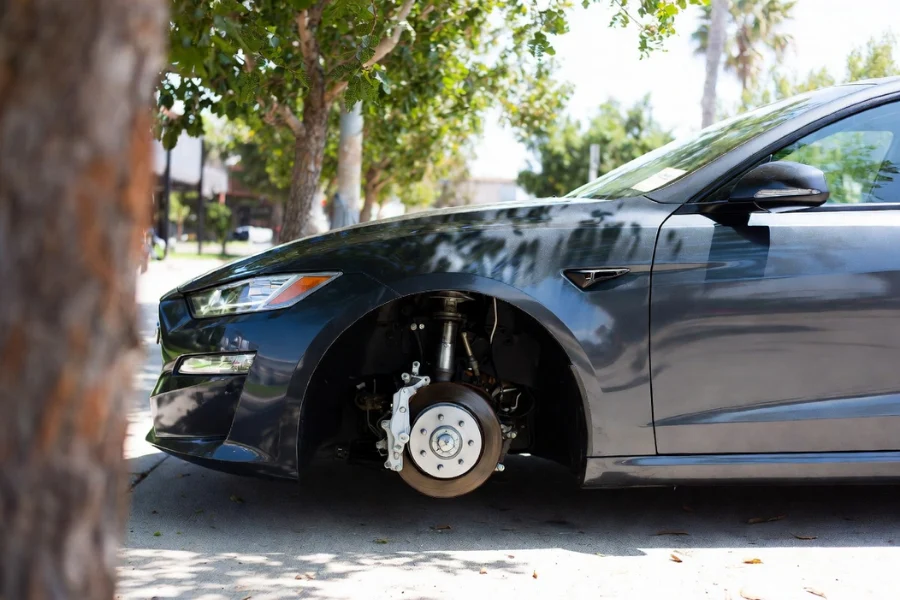
Brake dust is the result of friction between the brake pads and rotors. As the brake pads wear down, particles made up of iron, carbon, and synthetic materials break off and settle on the nearby surfaces, including your wheel rims. Heat, moisture, and pressure help bond the dust to the wheels, making it difficult to remove over time.
The amount of brake dust produced depends significantly on the materials used in the brake pads and rotors.
Ceramic brake pads produce the least amount of dust, as they are designed to be more efficient and less abrasive.
Semi-metallic brake pads tend to generate more dust due to their metal content, which can create more friction and particles when braking.
Organic brake pads create the most brake dust, as they contain softer compounds, which are effective for quieter braking but result in higher dust production.
The rotor material also plays a role in brake dust buildup. Rotors made from cast iron tend to produce more dust when used with non-ceramic brake pads, whereas carbon composite rotors paired with ceramic pads reduce dust significantly.
Aesthetics: Brake dust can darken and discolor your wheels, leaving them looking dull and dirty.
Corrosion: Left unchecked, brake dust can corrode the wheel's clear finish, causing pitting and discoloration.
Brake System Performance: Excessive brake dust buildup can eventually impair the braking system, reducing its efficiency.
Health and Environmental Risks: Brake dust contains metal particles that can contribute to pollution and pose health risks if inhaled.
To clean brake dust off your wheels effectively, you’ll need the right tools to prevent damage and ensure the best results:
Wheel Cleaner: Use a pH-neutral or reactive wheel cleaner to dissolve brake dust without harming the finish. Avoid household cleaners, as they may contain harmful chemicals.
Wheel Brushes: A soft-bristled wheel brush (large for the main areas and small for intricate spots like lug nut holes) will prevent scratching while ensuring a thorough clean.
Microfiber Towels: These are ideal for drying the wheels without leaving streaks or scratches.
Wheel Sealant or Wax: These products will protect your wheels from future brake dust accumulation and keep them looking shiny. You can consider brands like SUMATE, which also provides durable solutions for brake components, ensuring your vehicle remains in top condition.
Rinsing Tools: A garden hose or a low-pressure power washer is essential for rinsing off debris without damaging the finish.
Different types of wheels require different approaches.
Alloy Wheels: These are the most common type of wheel. Use a gentle pH-neutral cleaner to avoid damaging the metal finish.
Steel Wheels: Steel is more durable, but you still need a cleaner that won’t strip off the paint. Stick with mild cleaners and avoid anything too acidic.
Chrome Wheels: For chrome wheels, use a non-abrasive wheel cleaner and a soft brush to avoid scratches. A specialized chrome cleaner will work best to maintain their shine.

Park the vehicle in a shaded area to avoid direct sunlight, which can dry out cleaning products too quickly.
Allow the wheels to cool completely before starting the cleaning process.
Gather all the necessary tools and products to make the process smoother and more efficient.
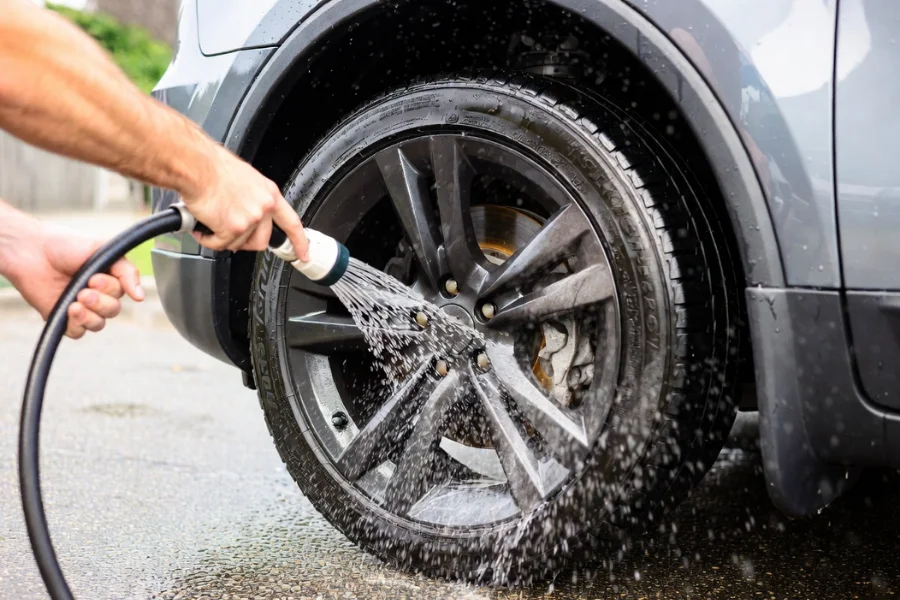
Use a hose or low-pressure washer to rinse the wheels, removing loose dirt and brake dust. Rinse from top to bottom to avoid pushing debris onto areas you’ve already cleaned.

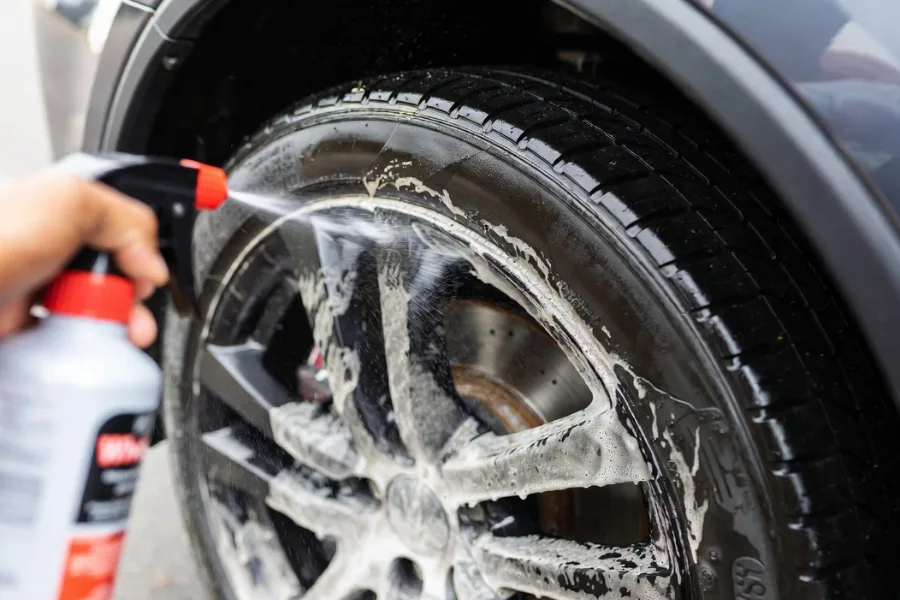
Spray a generous amount of wheel cleaner over the entire wheel surface, ensuring full coverage, including the inner barrel and spokes.
Let the cleaner sit for 3-5 minutes, allowing it to break down the brake dust. Reactive cleaners may change color, signaling that they’re working.
Use a large, soft-bristled brush to scrub the main areas of the wheel. For tight spots like lug nut holes, use a smaller brush or even a toothbrush.
Avoid applying too much pressure—let the brush and cleaner do the work.

Rinse the wheels thoroughly, ensuring all cleaner and loosened brake dust are washed away. Repeat the cleaning process if any dust remains.
Dry the wheels with microfiber towels to prevent water spots. Make sure to inspect the wheels for any remaining brake dust or stains; if needed, use a clay bar to remove stubborn spots.
Once the wheels are dry, apply a protective wax or sealant to form a barrier that helps keep brake dust from sticking in the future. Buff gently to achieve a smooth, shiny finish.
If the brake dust has been left for too long and is particularly stubborn, you can use the soaking method:
Soak paper towels or cloths with wheel cleaner and place them over the affected areas.
Cover with plastic wrap to keep the cleaner from drying out.
Let it sit for a few hours or up to 24 hours.
After soaking, gently scrub with a brush and rinse. Repeat if necessary.
Note: Always test the method on a small, inconspicuous area first to ensure it doesn’t damage the wheel finish.
Switching to ceramic brake pads is one of the best ways to reduce brake dust. They produce less dust compared to semi-metallic or organic brake pads. Ceramic pads are also less abrasive, which benefits both your wheels and the environment. If you're looking for reliable brake parts, SUMATE offers a variety of high-performance products that can contribute to reduced brake dust and longer-lasting parts.
A quick rinse of your wheels once a week helps prevent brake dust from setting in. It’s much easier to clean dust off regularly than to deal with a buildup later.
After cleaning, use a wheel sealant or protective wax to create a barrier that repels dust and dirt. This makes future cleaning much easier.
Avoid hard braking as much as possible. Smooth and gradual braking reduces the amount of brake dust produced and helps extend the life of your brake pads and wheels.
If you notice an unusual amount of brake dust, it could be a sign of a problem with the brake calipers or rotors. Regularly check and maintain your braking system to ensure it’s functioning properly.
How often should I clean brake dust off my wheels?
Clean your wheels every 2-4 weeks, depending on your driving habits and environmental factors. Regular cleaning helps prevent brake dust buildup and protects your rims from damage.
Can brake dust damage my wheels?
Yes, brake dust can cause corrosion, discoloration, and pitting to your rims if left untreated. Regular cleaning prevents these issues and maintains your wheel's appearance.
Can I use household cleaning products like dish soap?
No, household cleaners may damage your wheels’ finish and don’t effectively remove brake dust. Use a specialized wheel cleaner to preserve your rims and clean effectively.
What if my wheels are already pitted or discolored?
For minor damage, use a wheel polish to restore the surface. For severe pitting or discoloration, professional repair or replacement may be required to restore your wheels.
Can a pressure washer damage my wheels?
Pressure washers are safe if used with low pressure and a wide nozzle. Always maintain a safe distance to avoid causing damage to your rims or the wheel finish.
Keeping your wheels clean isn’t just about aesthetics; it’s a critical part of maintaining the performance of both your wheels and your braking system. By following the proper cleaning steps, using the right products, and taking preventive measures, you can keep your wheels looking great and protect your investment. Regular maintenance will also extend the lifespan of your wheels and brake components, ensuring your vehicle stays in top shape.