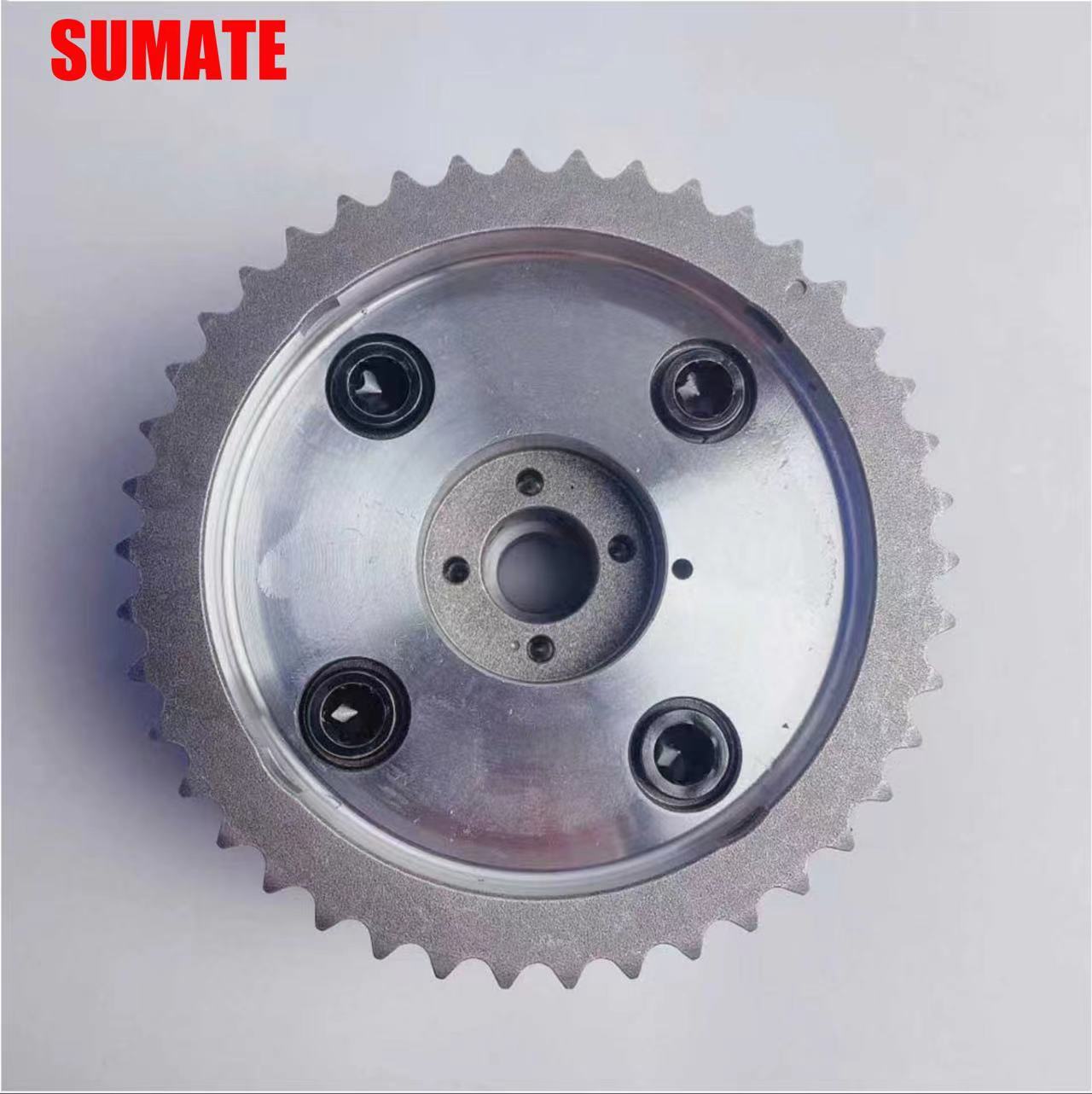
In the bay, you hear the same story from new owners. Someone buys a VVT-equipped car, floors it, and waits for that familiar surge they remember from an older Honda. The engine climbs cleanly to redline, but nothing hits. No step in torque. No tone change. No moment where the engine “wakes up.”
That’s when the question lands on the counter:
“If my car has VVT, shouldn’t it kick like VTEC?”
From a technician’s view, the answer starts inside the valvetrain—not on a meme page.
Engines only “kick” when the hardware changes how the valves lift.
Here’s how the systems differ where it matters—at the cam.
Uses oil pressure to rotate a cam phaser.
ECU advances or retards the cam angle based on load and rpm.
No secondary cam profile.
Feel: Smooth pull. Even torque. No sudden jump.
Locks rocker arms at a set rpm.
Switches from a mild lobe to an aggressive lobe.
Airflow jumps fast because lift and duration increase immediately.
Feel: Noticeable surge. Exhaust sharpens. The classic “kick.”
Combine continuous cam phasing with stepped lift.
Timing stays smooth; lift still transitions.
Feel: Clean low-end, deliberate high-rpm hit.
A cam only “kicks” when it switches to a higher-lift profile.
VVT never switches profiles.
VTEC does.
That single mechanical difference defines the driving feel.
Techs see this pattern often: a customer complains the car “hesitates,” but the scan shows a lazy OCV or a phaser sticking from old oil. Once it’s clean and responding, the engine fills the torque curve without the driver even noticing the system at work.
VVT’s entire job is smoothing torque, stabilizing emissions, and improving cold-start manners. Continuous timing changes help the engine breathe efficiently across all conditions.
There’s nothing in that design that creates a surge.
Below the switchover point, the engine runs on a small, economy-oriented cam profile.
Past that rpm, the ECU dumps oil pressure into the rocker pins and sends the valvetrain onto the big cam.
That’s when the airflow jumps.
Volumetric efficiency spikes.
Torque rises fast enough for the driver to feel it immediately.
It’s not a trick. It’s hardware doing exactly what it was engineered to do.
A turbo piles torque into the curve as boost builds.
VTEC delivers a sudden airflow change when the cam profile switches.
Two different mechanisms:
Turbo: Exhaust energy spins a turbine.
VTEC: Mechanical lobes change how far and how long valves stay open.
Both feel exciting, but for different reasons.
One ramps. One snaps.
Techs know VVT-related drivability issues show up long before anything “kicks.”
Common VVT complaints:
Sluggish low-end torque
Rough cold starts
Delayed phaser response
OCV faults after extended oil intervals
These never create a surge—they remove smoothness, which is exactly what VVT is supposed to deliver.
VTEC failures, on the other hand, tend to show up as:
No high-rpm pull
Early switchover or no switchover
Dull top-end power
Oil pressure-related VTEC codes
Different systems. Different symptoms. Different expectations behind the wheel.
VVT is a control system built for refinement and efficiency.
VTEC is a mechanical shift built for airflow and top-end strength.
One smooths the curve.
One steps over it.
Tools help you see oil pressure, cam angles, and switchover points.
But the driving feel always comes back to how the hardware moves air—and how well the system is maintained.
VVT adjusts cam timing smoothly without switching cam profiles, so torque stays linear. No lift change means no sudden airflow jump. If the engine feels steady, the system is operating as designed.
VVT delivers smooth torque, better emissions, and strong low-rpm response. VTEC and VVTL-i offer high-rpm airflow and a noticeable top-end surge. Each system targets different driving goals, not the same outcome.
Yes. Engines with lift switching—like Toyota VVTL-i, Porsche Variocam Plus, and BMW Valvetronic—can produce a similar high-rpm surge. Any design that changes cam lift will create that stepped power feel.
Only if the hardware supports lift switching. Standard VVT engines lack high-lift cam lobes, so software alone can’t create a “kick.” Lift-equipped engines, such as VVTL-i, can optimize switchover points through tuning.
Both depend on clean oil and stable pressure. Dirty OCVs, sludge, timing-chain wear, or wrong viscosity all affect timing control. Follow the correct oil grade and intervals to keep the system responsive and reliable.
VTEC engages when oil pressure, rpm, and ECU targets align, locking the rockers onto a high-lift cam profile. The sudden airflow increase boosts torque and creates the sharp high-rpm surge drivers feel.
Yes. A sticky OCV, low oil pressure, or worn timing components can delay cam phasing and cause rough idle. When the system is clean and responsive, VVT maintains a stable, smooth idle.
VVT relies heavily on oil quality and pressure. Sludge, varnish, worn chains, or weak tensioners can cause timing faults and drivability issues. When clean and maintained, the system is reliable but sensitive to neglect.