Facebook

WELCOME TO OUR BLOG

We're sharing knowledge in the areas which fascinate us the most
click

Camshaft vs Crankshaft: How This Core Duo Keeps Every Engine in Sync

By Lucas November 29th, 2025 168 views


Why Techs Care About These Two Shafts

Cold starts, rough idle, timing faults—most of the problems techs see on the bay floor trace back to the top end and bottom end falling out of sync. The camshaft manages breathing. The crankshaft carries the load. When they stop speaking the same language, an engine will flag faults fast.

This breakdown keeps the structure of your original article but rewrites it in a SUMATE technician-centric tone—direct, practical, and grounded in real shop experience.

Meet the Camshaft: The Valve-Timing Brain of the Top End

Core Function

The camshaft sets every valve event the engine depends on. Each lobe lifts its valve only during the exact window the combustion cycle needs. When lobe wear, VVT drift, or timing stretch shift those events, airflow goes off and the engine shows it immediately—misfires, weak throttle response, or unstable idle.

Location

It lives in the top end, inside or above the cylinder head, running the intake and exhaust valves through the valve train.

Common Layouts

SOHC

  • One camshaft per bank

  • Runs both intake and exhaust valves

  • Simple, fewer moving parts

DOHC

  • Two cams per bank

  • Intake and exhaust get independent timing

  • Better breathing and cleaner high-RPM performance

Performance Impact

A cam’s profile—lift, duration, and timing—shapes the entire airflow curve. Small changes influence torque, emissions stability, and how cleanly the engine pulls under load. In real shop terms: cam design is the difference between a smooth cold start and a morning full of comeback diagnostics.

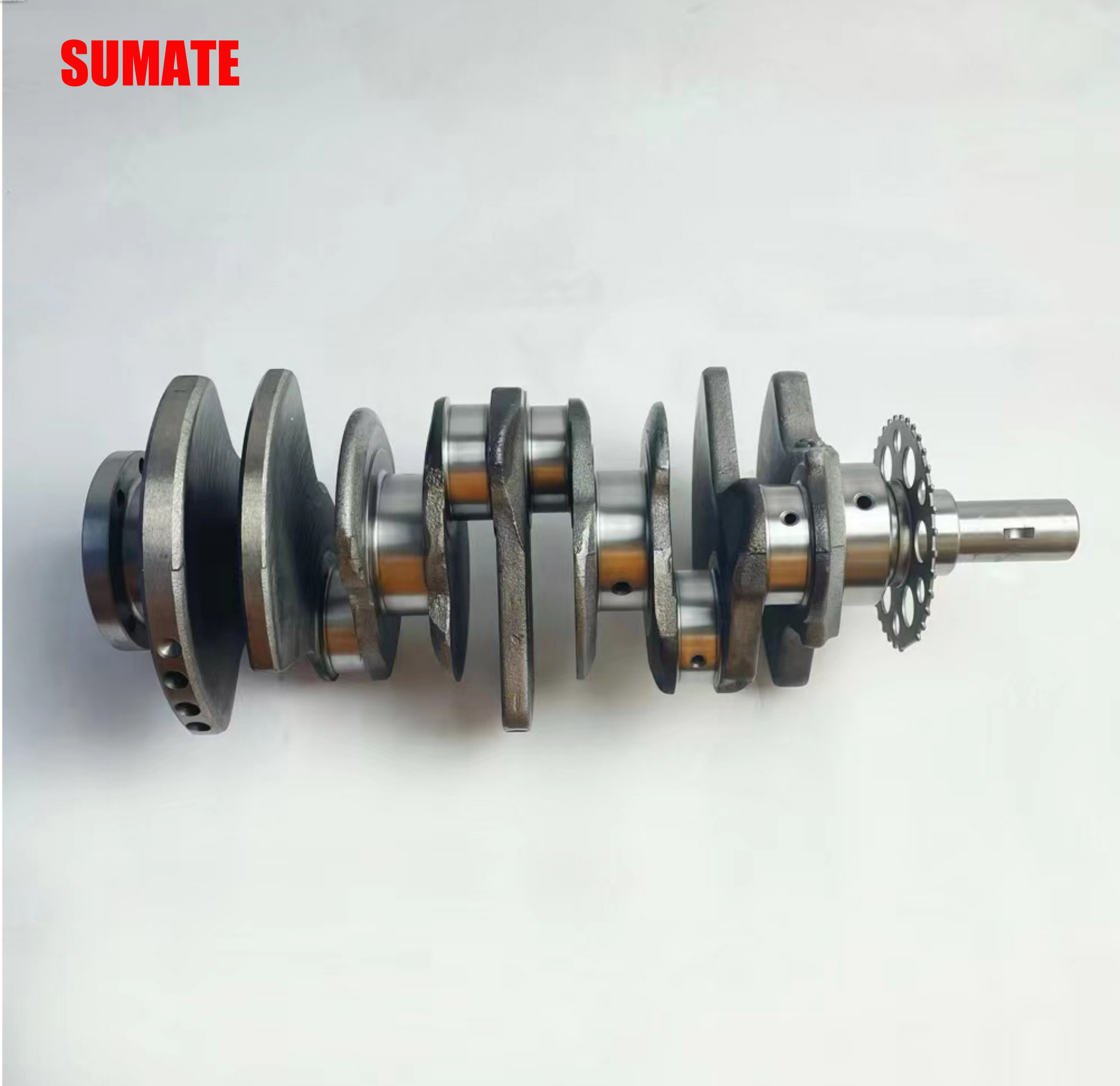
Meet the Crankshaft: The Heart of Rotation in the Bottom End

Core Function

Every power stroke drives a piston down. The crankshaft converts that linear force into rotation, sending it through the flywheel and transmission to the wheels. Any issue here—bearing wear, imbalance, or oil starvation—shows up quick as noise, vibration, or timing faults.

Location

It runs through the engine block, supported by main bearings that must keep oil pressure steady and load spread evenly.

How It Works

  • Pistons connect through rods.

  • Combustion pushes the piston down.

  • The rod rotates the crank journal.

  • This repeats thousands of times per minute.

If rotation stops being smooth—low oil pressure, scored journals, or excessive endplay—the crank starts talking through bottom-end thumps or correlation errors.

Balancing

Counterweights keep piston and rod mass in check. Proper balance reduces vibration and protects bearings. When balance goes off, you’ll feel it through the block and see it in timing data.

How the Two Work Together: Timing, Synchronization, and the Four-Stroke Dance

Physical Connection

The camshaft and crankshaft stay locked together with a timing belt, chain, or gear drive. When tensioners wear, guides break down, or a chain stretches, the shafts drift apart. Live data will show it before the customer even hears the noise.

Why Timing Matters

Manufacturers rely on exact alignment marks. When set right, valves open only when pistons give them room. When even a tooth slips, compression drops, idle shakes, and sensors start flagging correlation faults.

The Four-Stroke Relationship

One full four-stroke cycle needs:

  • Two crankshaft rotations

  • One camshaft rotation

That 2:1 ratio keeps:

  • Intake valves aligned with intake stroke

  • Valves sealed during compression and power

  • Exhaust valves opening only on exhaust

When that rhythm drifts, drivability suffers first. Mechanical damage isn’t far behind.

Camshaft vs. Crankshaft: Key Differences

Feature Camshaft Crankshaft
Primary Function Manages intake/exhaust valve timing Converts piston force into rotation
Location Cylinder head (top end) Engine block (bottom end)
Driven By Crankshaft via timing belt/chain/gears Pistons via connecting rods
Speed One rotation for every two crank rotations Two rotations per camshaft rotation
Key Components Lobes, journals, gears Journals, crankpins, counterweights
Materials Cast iron or steel Forged steel or cast iron

What Techs See When These Parts Start Failing

Camshaft Failure Signs

  • Rough, unstable idle

  • Persistent or random misfires

  • Hard warm starts

  • Noticeable power loss under load

In the bay, these often point to:

  • Lobe wear

  • VVT sticking

  • Chain or belt stretch

  • Oil flow issues affecting cam journals

Crankshaft Failure Signs

  • Deep knocking from the bottom end

  • Oil leaks at main seals

  • Severe drop in power

  • Timing correlation faults

These usually indicate:

  • Main bearing wear

  • Journal scoring

  • Imbalance

  • Excessive endplay

When a crank starts making noise, the window for preventing major damage is short.

Frequently Asked Questions (FAQ)

1. What is the main function of the camshaft?

The camshaft times the opening and closing of intake and exhaust valves. Its lobes control airflow into the engine and the removal of exhaust gases, ensuring efficient combustion and proper performance throughout the RPM range.

2. How does the crankshaft work?

The crankshaft converts the pistons’ up-and-down motion into rotation. Combustion drives each piston downward, and the connecting rods transfer that force to the crankshaft, creating the rotational power that moves the vehicle.

3. What is the difference between a camshaft and a crankshaft?

The camshaft controls valve timing in the top end, while the crankshaft creates engine rotation in the bottom end. One manages airflow, the other delivers power. Both must stay synchronized for clean combustion.

4. Which one spins faster?

The crankshaft spins faster. In a four-stroke engine, it completes two full rotations for every one rotation of the camshaft. This 2:1 ratio keeps valve timing aligned with piston travel.

5. Can the camshaft directly drive the crankshaft?

No. The crankshaft drives the camshaft through a belt, chain, or gear set. The camshaft simply follows the crankshaft’s rotation to keep valve timing matched to piston position.

6. What happens if the camshaft and crankshaft fall out of sync?

Timing loss leads to misfires, rough running, power drops, or a no-start. In interference engines, severe misalignment can cause piston-to-valve contact and major mechanical damage.

7. What are common signs of a failing camshaft?

A worn camshaft can cause misfires, rough idle, weak acceleration, hard starting, or VVT performance issues. These symptoms point to lobe wear, timing faults, or valve-train problems.

8. Can a damaged crankshaft be repaired?

Minor surface wear may be machined, but cracks, bends, and severe scoring require replacement. Because the crankshaft carries heavy load, repairs are only practical when damage is minimal.

9. Is it worth fixing a camshaft?

Light wear or isolated lobe damage may be repairable, but heavy scoring or VVT-related issues usually require replacement. Labor is significant, so repair decisions depend on overall engine condition.

10. Can a camshaft damage an engine?

Yes. Severe lobe wear, timing issues, or VVT failure can disrupt valve movement and combustion timing. Left unchecked, this can lead to misfires, overheating, or in extreme cases valve-to-piston impact.

11. Does a camshaft increase horsepower?

Performance camshafts can increase horsepower by altering valve lift and duration, improving airflow at higher RPM. Gains depend on engine design, tuning, and supporting components.

More Than Just Metal: Understanding the Core Components of Your Car's Engine
Previous
More Than Just Metal: Understanding the Core Components of Your Car's Engine
Read More
Does VVT Kick Like VTEC? A Technician’s Breakdown
Next
Does VVT Kick Like VTEC? A Technician’s Breakdown
Read More