The car stops fine yesterday.
Today the pedal drops halfway before it grabs.
Customer says, “It feels different.”
That’s where brake bleeding becomes more than a routine step. It becomes diagnosis.
Brake bleeding isn’t just removing air. It’s restoring hydraulic integrity in a system that depends on fluid that does not compress. When that integrity breaks, pedal feel changes immediately.
Let’s break down what brake bleeding really means in the real world.

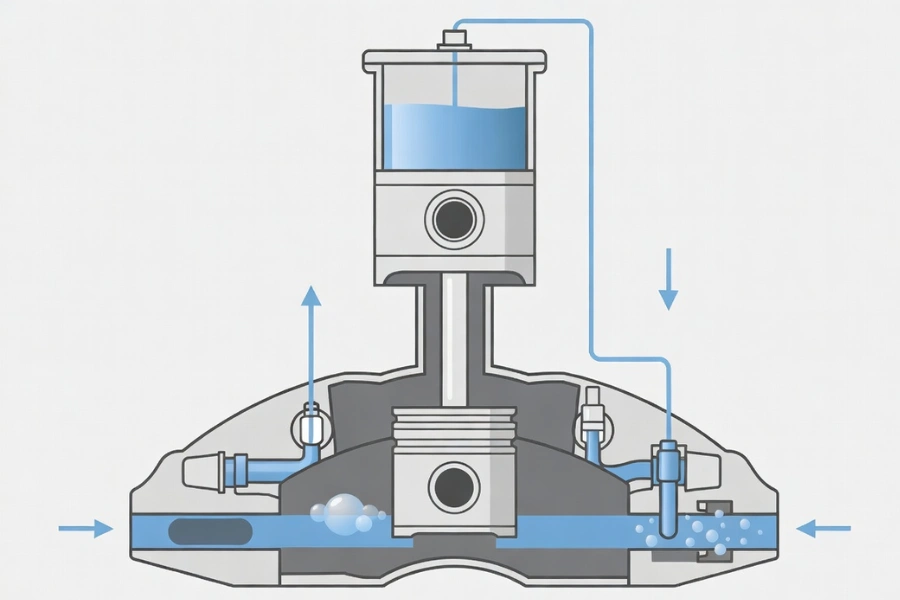
Your brake system is a sealed hydraulic circuit.
Press the pedal:
Master cylinder builds pressure
Fluid transfers force through lines
Caliper pistons clamp pads
Rotors convert motion into heat
Brake fluid is incompressible.
Air is compressible.
Even small air pockets absorb pressure before it reaches the caliper. That delay creates:
Long pedal travel
Soft engagement
Inconsistent braking response
Brake bleeding removes trapped air and restores a solid hydraulic column from pedal to caliper.
That’s the physics behind the brake bleeding process.
Air doesn’t just appear. It enters for specific reasons.
Common real-world causes:
Caliper replacement
Brake line corrosion repair
Master cylinder swap
Letting the reservoir run dry
Severe overheating and fluid boil
Brake fluid is hygroscopic. It absorbs moisture from the atmosphere over time.
Moisture lowers boiling point.
Under heavy braking on long downhill grades, loaded trucks, or repeated stops, fluid can vaporize. Vapor behaves like air.
That’s when pedal fade shows up.
This is where experience matters.
Not every soft brake pedal means air in the brake lines.
Likely cause trapped air compressing on first stroke.
Likely cause master cylinder internal bypass.
Possible vacuum booster influence.
Most common cause incomplete brake bleeding.
Bleeding fixes air.
It does not fix worn seals.
Skipping diagnosis creates comebacks.
Brake bleeding is required when:
Any hydraulic line has been opened
Calipers or wheel cylinders are replaced
Master cylinder is replaced
Fluid is heavily contaminated
ABS module may have ingested air
Most manufacturers recommend fluid replacement every two years because moisture contamination steadily reduces boiling point and corrodes internal components.
Brake bleeding during fluid service restores both pressure stability and chemical integrity.

Modern vehicles complicate brake bleeding.
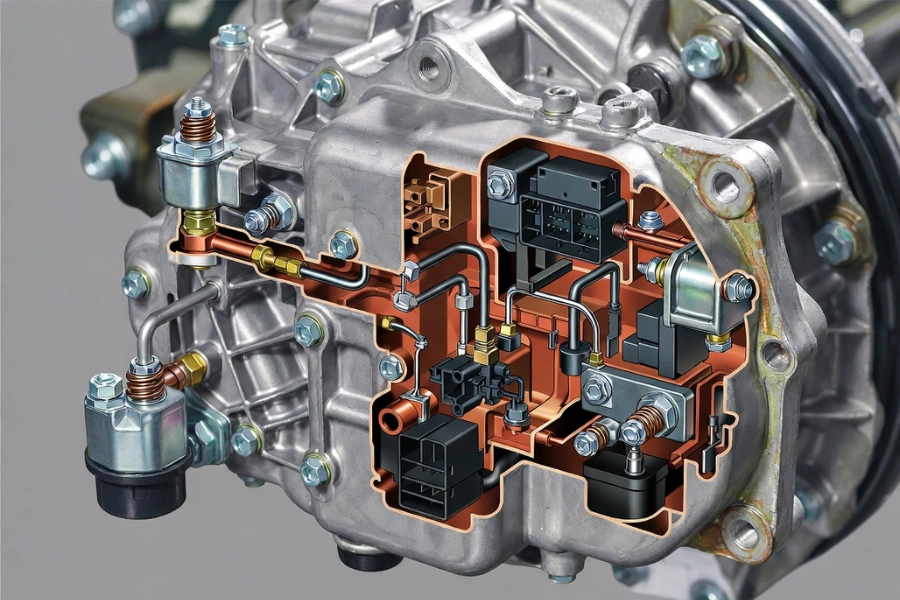
Air can become trapped inside the ABS hydraulic control unit. Standard pump and hold bleeding may not clear it.
In many systems, proper brake bleeding requires:
Scan tool activation
Cycling the ABS pump
Following manufacturer specific sequence
Fail to do that, and you’ll chase a soft pedal that won’t go away.
Technicians who understand CAN bus diagnostics and live data know that some brake issues aren’t mechanical. They are electronic control interactions.
Brake bleeding explained properly must include this reality.
Reliable.
Requires coordination.
Risk of master cylinder seal damage on high mileage units if pedal bottoms out repeatedly.
Consistent pressure.
Excellent for full fluid flush.
Reduces chance of introducing new air.
Fast for single corners.
Can pull false air through bleeder threads if not sealed properly.
Choose based on vehicle design, job scope, and condition of components.
Passenger cars show soft pedals.
Commercial vehicles show downtime.
On trucks, buses, and construction equipment:
Higher brake temperatures
Greater fluid stress
Longer service intervals
Increased risk of moisture contamination
Fleet operators don’t just bleed brakes to fix feel. They do it to prevent roadside failure.
For distributors and maintenance planners, brake bleeding isn’t an isolated procedure. It’s part of a reliability strategy.
Manufacturers supplying durable drive system components like SUMATE, known for belt and tensioner assemblies across commercial and passenger platforms, understand system level reliability. When components across the engine and chassis operate consistently, stress loads stabilize across the vehicle.
Preventive maintenance reduces strain everywhere.
Air re enters system. Start over.
Now you’re replacing a caliper.
Under pressure, aged hoses can balloon slightly. That mimics air in the system.
Bleeding won’t fix internal bypass.
Real world brake bleeding is part mechanical procedure, part diagnostic reasoning.
After proper brake bleeding:
Pedal is firm on first press
Engagement height is consistent
No delayed pressure rise
No fluid leaks
Clean fluid at each corner
Test at low speed.
Monitor pedal consistency over several stops.
A correct brake bleeding job feels predictable.
Technicians focus on eliminating comebacks.
Fleet managers focus on uptime.
Distributors focus on component reliability.
Brake bleeding, when understood correctly, connects all three.
Hydraulic systems depend on:
Clean fluid
Proper seals
Correct procedures
Reliable components
Quality parts reduce unexpected system stress. Suppliers like SUMATE emphasize durability and stable production standards, supporting maintenance cycles that minimize repeat failures.
That’s operational logic, not marketing language.
Air compresses.
Fluid does not.
That’s the foundation of brake bleeding explained in simple terms.
Tools help.
Pressure bleeders help.
Scan tools help.
But skilled technicians, sound diagnostics, and reliable components are what restore braking performance the right way and keep it that way.