Facebook

WELCOME TO OUR BLOG

We're sharing knowledge in the areas which fascinate us the most
click

Ceramic vs. Semi-Metallic Brake Pads — What Actually Matters in the Bay

By Lucas8283 February 28th, 2026 112 views

Customer rolls in after a long downhill run.
Pedal feels normal. Stopping distance doesn’t.

You smell heat before you see it.

This is where the ceramic vs semi metallic brake pads debate stops being theoretical and starts being real.

Brake performance is thermal management. If you don’t understand where the heat goes, you’re guessing.

Let’s break it down the way it happens in the shop.

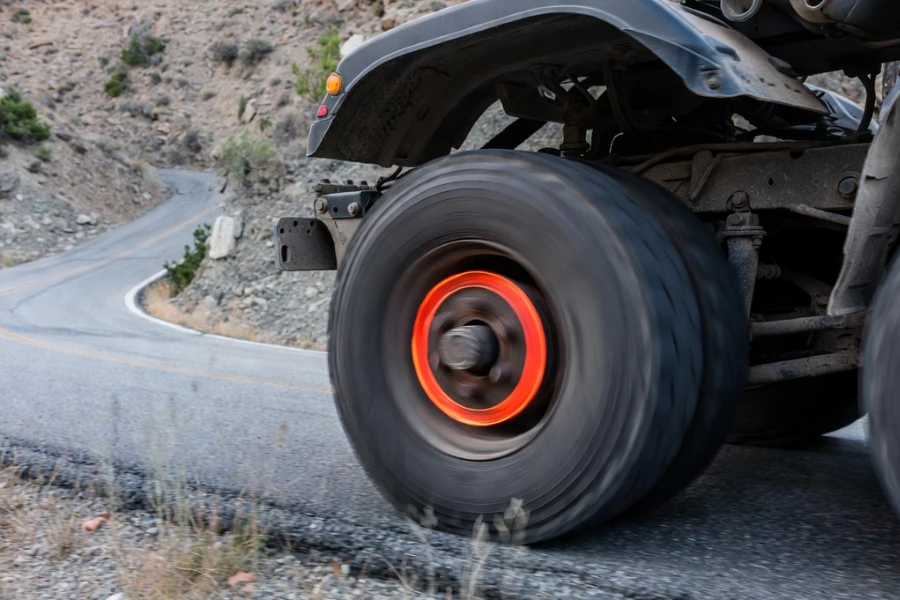
Brake Fade Under Load — Where Material Choice Shows Itselfbrake fade example showing overheating rotor during heavy load braking

Loaded truck. Mountain descent. Repeated braking.

The rotor glows. The pedal firms up. But stopping power drops.

That’s brake fade.

Here’s the mechanical chain reaction:

  • Friction converts motion into heat.

  • Resin binders begin to decompose at high temperature.

  • Gases form at the pad surface.

  • Friction coefficient drops.

  • Stopping distance increases.

Semi-metallic brake pads handle this better under sustained load.

Why?

Because metal fibers conduct heat into the rotor faster. Heat spreads into the disc mass instead of concentrating at the pad face. That delays fade.

Ceramic brake pads retain heat more evenly but transfer it slower. That’s fine for daily commuting. It’s not ideal for repeated heavy braking.

If you’re asking what are the best brake pads for trucks, heat capacity and transfer matter more than dust or noise.

Ceramic vs. Semi-Metallic Brake Pads — Heat Behavior Comparison

Here’s a quick breakdown technicians can use at the counter:

Feature Ceramic Brake Pads Semi-Metallic Brake Pads
High-temp performance Moderate Strong
Heat dissipation Slower transfer Faster transfer
Brake fade resistance Good for daily use Better under heavy load
Rotor wear Lower Higher
Brake dust Low, lighter color Higher, darker dust
Noise level Quiet Can squeal
Best application Passenger cars Trucks, towing, fleet

This table answers most customer questions immediately.

Cold Starts and Initial Bite — Why Temperature Still Matters

It’s 15°F. First stop sign. Customer says the brakes feel flat.

Here’s what’s happening.

Semi-metallic pads contain steel and iron fibers. Metal creates mechanical bite immediately, even at low temperature.

Ceramic pads need a little heat to reach optimal friction levels. They’re stable, but initial grab is softer in cold climates.

For fleet vehicles, commercial delivery trucks, and cold weather regions, semi-metallic provides more predictable low-temp response.

This is why ceramic vs metallic brakes is often climate-dependent.

Rotor Wear — The Real Cost Nobody Talks About

Six months later, the rotors are grooved.

Customer thinks the pads were defective.

In reality, semi-metallic pads contain abrasive metal particles. They increase stopping strength but also cut into rotor surfaces over time.

Ceramic pads create a thin transfer layer. Friction happens within that layer instead of grinding the rotor directly.

Result:

  • Ceramic = cleaner rotors, longer disc life

  • Semi-metallic = stronger bite, faster disc wear

For passenger vehicles prioritizing maintenance intervals, ceramic reduces long-term rotor replacement cost.

For heavy-duty use, rotor wear is often an acceptable tradeoff for thermal stability.

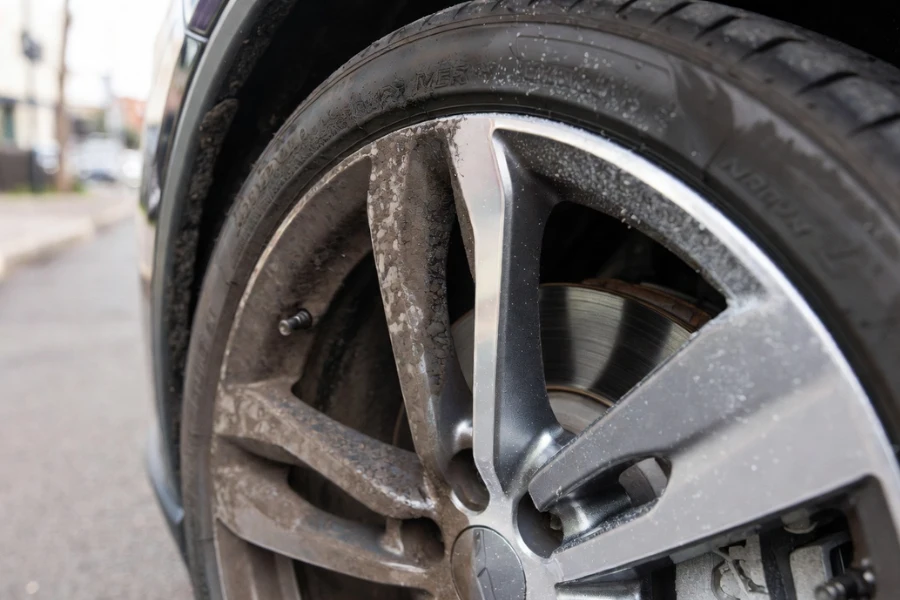
Brake Dust Comparison — Why Wheels Tell the Storybrake dust comparison between ceramic and semi metallic brake pads

Look at the wheels.

Dark residue means metal oxidation.

Semi-metallic brake pads produce more brake dust because of their metal content. That dust sticks. It stains wheels.

Ceramic pads produce lighter, finer dust. It’s less visible and easier to clean.

If the customer cares about clean wheels, luxury appearance, and reduced maintenance, ceramic usually wins that conversation.

It’s Not Just Pads — It’s a System

Brake pads don’t operate alone.

They depend on:

  • Rotor mass

  • Caliper piston design

  • Brake fluid boiling point

  • Airflow and cooling

Brake fade isn’t just pad fade. Fluid fade can happen when boiling point is exceeded. That’s why system matching matters.

Choosing between ceramic vs semi metallic brake pads without evaluating the whole system leads to repeat failures.

At SUMATE, even though our core production focuses on belt tensioners and drive system components, we operate under the same engineering principle — load management determines durability. Whether it's rotational belt stress or thermal brake stress, system balance prevents failure.

Parts don’t fail randomly. They fail under unmanaged stress.

When to Recommend Ceramic vs Semi-Metallic Brake Pads

Choose Ceramic If:

  • Daily commuting

  • Low dust priority

  • Quiet braking required

  • Passenger vehicles

  • Long rotor life matters

Choose Semi-Metallic If:

  • Trucks and heavy vehicles

  • Towing applications

  • Repeated downhill braking

  • Cold climates

  • Fleet reliability under load

There is no universal “better.” There is only correct for application.

FAQ — Ceramic vs Semi-Metallic Brake Pads

Are ceramic brake pads better than semi-metallic?

Not universally. Ceramic brake pads are quieter and produce less dust. Semi-metallic brake pads handle heat and heavy loads better. The right choice depends on vehicle use and operating conditions.

What is the main disadvantage of ceramic brake pads?

Under sustained heavy braking, ceramic pads can retain heat longer and may experience earlier brake fade compared to semi-metallic pads in high-load situations.

Which brake pads last longer — ceramic or metallic?

Ceramic pads often last longer in daily driving and are gentler on rotors. Semi-metallic pads can wear rotors faster but may resist breakdown under heavy use.

Are semi-metallic brake pads good for trucks?

Yes. Semi-metallic pads are often considered the best brake pads for trucks because they dissipate heat efficiently and perform better under load and towing conditions.

Do ceramic brake pads reduce brake dust?

Yes. Ceramic brake pads produce lighter, finer dust compared to semi-metallic brake pads, helping keep wheels cleaner.

Final Word From the Bay

Brake jobs don’t come back because of theory. They come back because of mismatch.

Heat builds. Materials react. Systems strain.

If you match the pad to the load, you prevent comebacks. If you guess, you invite them.

The same mindset that drives durable tensioner systems at SUMATE applies here — understand the stress, manage the load, choose the material accordingly.

Because in real-world service, performance isn’t marketing.

It’s what holds up under pressure.

broken silencer under vehicle during inspection in repair shop
Previous
Can You Drive With a Broken Silencer? Safety, Backpressure and Engine Damage Explained
Read More
Brake Bleeding Explained in real workshop showing air bubbles in brake lines during bleeding process
Next
Brake Bleeding Explained: Why Your Brake Pedal Feels Soft and How to Fix It
Read More