If you’ve been around vehicles long enough, you’ve heard it. A sharp squeak every time the suspension loads up—rolling over a speed bump, easing into a turn, creeping through a rough lot.
Most drivers tune it out at first. Techs don’t. Because in the bay, that sound almost always shows up before something bigger does.
I’ve seen plenty of minor squeaks turn into accelerated bushing wear, loose steering feel, and uneven tire wear—especially on vehicles that rack up miles fast or carry steady load. The noise itself isn’t the failure. It’s the warning that isolation is breaking down.
Catch it early, and you’re usually replacing rubber. Ignore it, and metal starts doing work it was never meant to do.
A suspension system doesn’t just hold the vehicle up. It manages load, movement, and vibration at the same time.
That job is split across a few key parts: springs carry the weight, shocks and struts control motion, bushings isolate vibration, ball joints and tie rod ends allow controlled articulation, and sway bars manage side load during cornering.
When everything is healthy, these parts move under load without noise. When rubber hardens, grease dries out, or alignment shifts, friction shows up fast. Cold mornings usually expose it first. Rubber stiffens, clearances change, and a part that was barely holding on starts talking.

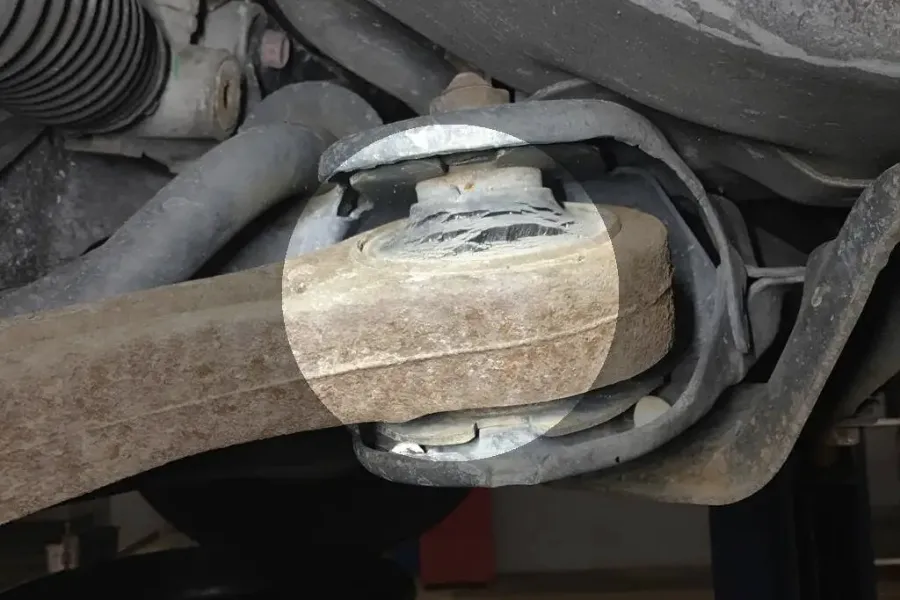
Bushings are the first line of isolation and often the first to fail. Heat cycles, mileage, and constant flex slowly harden the rubber. Once that happens, the bushing stops absorbing movement and starts transmitting it.
The most common symptoms are squeaks over bumps, braking, or driveway transitions. Typical problem areas include control arms, sway bar mounts, and shock or strut mounts. Once a bushing starts squeaking consistently, wear usually accelerates quickly.

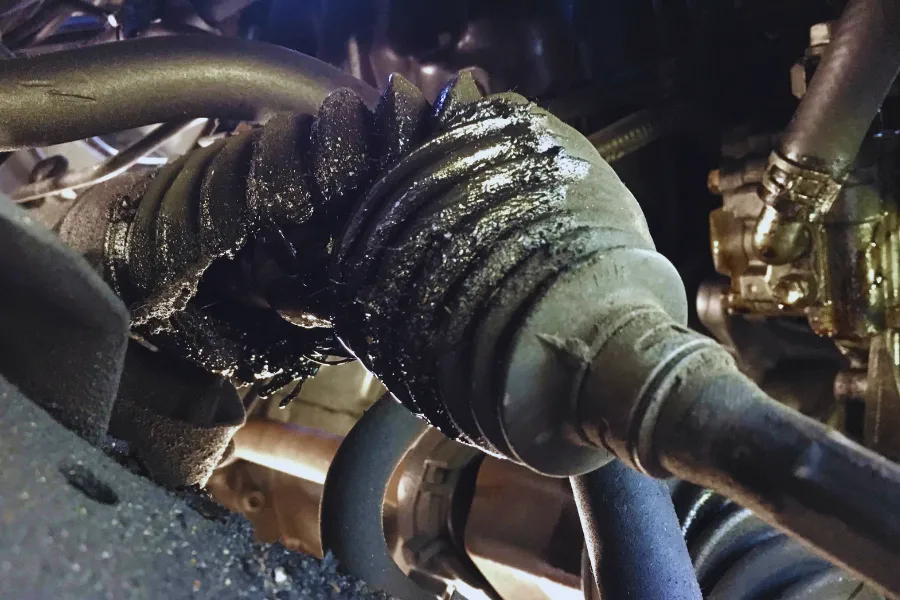
Ball joints and tie rod ends rely on grease to move quietly. When lubrication breaks down or a dust boot tears, friction takes over.
This usually shows up as sharp squeaks during turns or a steering feel that’s lighter or less precise than it should be. On high-mileage or heavily used vehicles, these joints tend to dry out sooner.
Shocks themselves rarely squeak, but their mounts do. As mounts compress or crack, movement shifts into areas not designed to carry it. If a shock is leaking, that extra motion amplifies the noise.
Common signs include squeaking or creaking over uneven roads, excessive rebound, or visible oil on the shock body. Replacing mounts without addressing weak shocks often leads to repeat complaints.
Springs rely on rubber isolators to prevent metal-on-metal contact. When isolators wear out or slip out of place, springs can rub against their seats.
This often causes repetitive squeaks at low speed over small bumps and may disappear at highway speed. Corrosion accelerates this issue, especially in wet or salty environments.
Sway bar components move constantly during cornering. Once their bushings dry out or links loosen, they tend to chirp or squeak when one wheel loads before the other.
These parts are small, but on vehicles that see frequent stop-and-go driving or uneven loading, they wear faster than many expect.
Not every squeak comes from normal wear. Improperly installed aftermarket parts, fasteners tightened without the vehicle at ride height, or rust buildup changing contact surfaces can all create noise. If a squeak appears immediately after suspension work, installation details should be checked first.

The first step is identifying the pattern. Does the noise occur while turning, braking, or only at low speed? Does it show up on cold starts? Patterns narrow the search quickly.
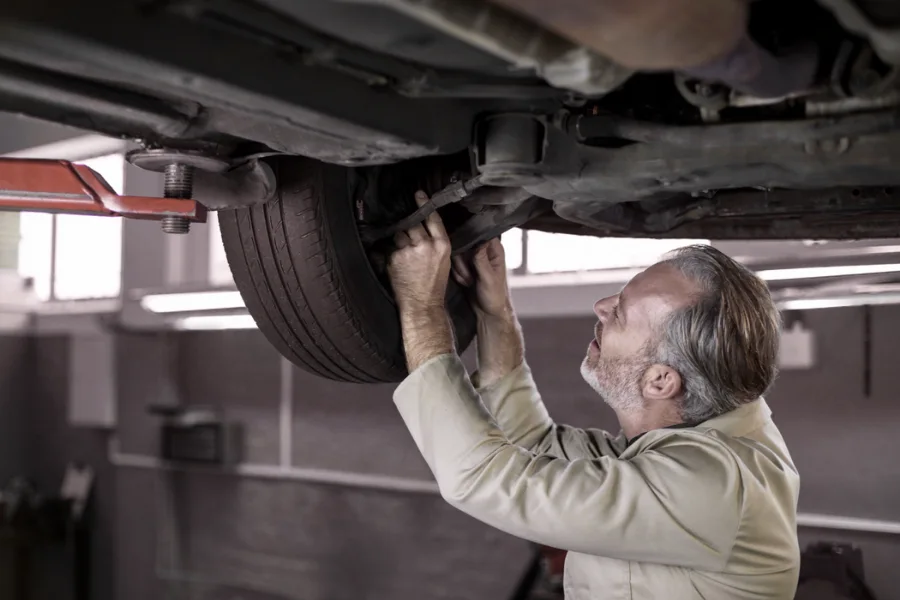
Next comes a visual inspection with the vehicle safely supported. Cracked bushings, leaking shocks, torn joint boots, missing spring isolators, or shiny wear marks often point directly to the source.
A bounce test helps confirm damping issues. Excessive rebound or noise during compression usually indicates weak shocks or failed mounts.
Finally, isolating the noise with controlled loading using a pry bar—while another person listens—removes the guesswork. This is where experience saves time.
Replacing worn bushings is the most reliable fix. High-quality rubber restores isolation and quiet operation. Polyurethane bushings last longer but often require periodic lubrication to stay silent.
Serviceable joints should be greased properly. Rubber-safe lubricants can help confirm a diagnosis, but they rarely solve the problem long term.
Leaking shocks, cracked mounts, or weak struts should be replaced, always in pairs on the same axle to maintain balance. Sway bar links and bushings are inexpensive and often deliver immediate noise reduction. Misaligned springs should be reseated, and missing or damaged isolators replaced. Severely corroded or broken springs need full replacement.
Can I keep driving with a squeaky suspension?
Light squeaks from dry bushings may allow short-term driving. However, if the noise is paired with loose steering, increased bounce, clunking, or uneven tire wear, inspection should not be delayed. Under load and mileage, minor suspension wear tends to accelerate quickly and lead to larger, more costly repairs.
Can WD-40 help squeaky suspension noise?
No. WD-40 is a water-displacing spray, not a long-term lubricant, and it can degrade rubber components. Using it may quiet the noise briefly but often worsens bushing damage over time. For diagnosis or temporary relief, only use rubber-safe or silicone-based suspension lubricants.
Why did the noise start after new suspension parts were installed?
Post-install squeaks are usually related to installation, not defective parts. Common causes include fasteners tightened without the vehicle at ride height, missing lubrication at contact points, or incorrect torque values. These issues allow unwanted movement and friction once the suspension is loaded.
What is the most common cause of squeaky suspension?
Worn or dried suspension bushings are the most frequent source. As rubber ages, it hardens and loses its ability to isolate movement, allowing metal-to-metal contact. This often shows up first during cold starts, low-speed driving, or when the suspension is repeatedly loaded.
How do you fix a squeaky suspension properly?
Proper repair starts with identifying the noise source. Temporary lubrication may confirm the cause, but lasting fixes usually involve replacing worn bushings, joints, or mounts. Related components should be inspected together, since suspension parts work as a system and uneven wear often leads to repeat noise.
A squeaky suspension isn’t just an annoyance. It’s feedback from a system losing isolation and control.
Addressing it early keeps repairs focused and affordable. Waiting allows wear to spread across connected components, especially on vehicles that see high mileage or constant load. Experienced technicians know long-term reliability comes from parts that work together as a system, not isolated fixes.
That’s why suppliers like SUMATE, which focus on durable, well-matched suspension and drive components, help reduce comebacks and keep vehicles running quietly over the long haul. Tools help diagnose. Quality parts restore function. Experience keeps the fix from coming back.