Facebook

WELCOME TO OUR BLOG

We're sharing knowledge in the areas which fascinate us the most
click

Parts of a Brake System

By Lucas January 9th, 2026 105 views

Why the Brake System Matters More Than Any Other Safety System

The brake system is the most critical safety system on any vehicle. Every stop depends on multiple components working together under heat, load, and real-world abuse. When one part falls out of sync, the problem rarely stays isolated.

Press the brake pedal and a chain reaction begins. Foot force is multiplied, converted into hydraulic pressure, and finally turned into friction at the wheels. That friction stops the vehicle—and generates intense heat. Because heat and pressure never stop working the system, many brake components are designed to wear. The real risk isn’t wear itself. It’s ignoring how wear in one part stresses the rest of the system.

Understanding how the brake system works—and how it fails—helps drivers, fleet operators, and parts buyers catch problems early, avoid repeat repairs, and make smarter decisions before safety is compromised.

How the Brake System Is Built — From Pedal Input to Wheel Control

The brake system works as a continuous flow. Problems show up fastest when that flow is interrupted.
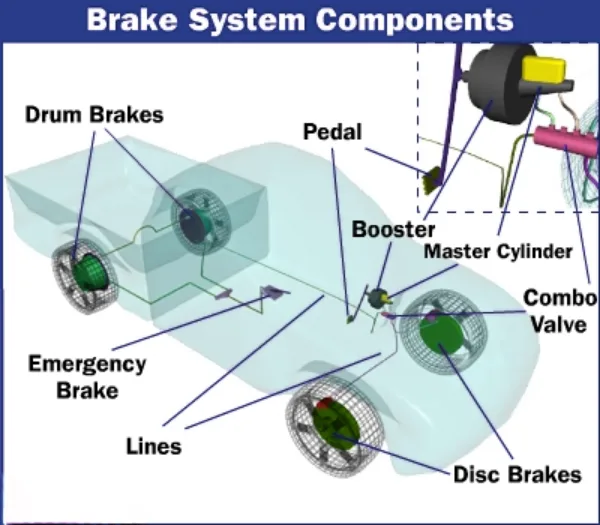
Parts of a Brake System flow diagram from brake pedal to wheel braking force

Driver Input and Force Control: Where Braking Begins

Brake Pedal: Where Every Stop Starts

The brake pedal is the driver’s only direct input. It converts foot pressure into mechanical force and sends it downstream to the booster and master cylinder.

Pedal feel matters. A pedal that changes overnight is rarely “nothing.” It’s usually the first signal that pressure is being lost, delayed, or amplified incorrectly.

Brake Booster: Why Modern Brakes Don’t Feel Heavy

The brake booster reduces the effort needed to slow a vehicle. Most systems use engine vacuum acting on a diaphragm to multiply pedal force before it reaches the master cylinder.

When the booster fails, braking still works—but effort spikes. If the pedal suddenly feels hard on cold starts or during low engine vacuum conditions, don’t chase pads or rotors first. That’s a booster or vacuum supply problem, and replacing friction parts won’t fix it.

Master Cylinder: Turning Pedal Force Into Hydraulic Pressure

The master cylinder converts mechanical force into hydraulic pressure. Inside, pistons compress brake fluid and send pressure through separate circuits to the wheels.

Soft or sinking pedals are often blamed on air alone. In practice, if bleeding restores feel briefly and the pedal fades again, the internal seals are bypassing. That’s a master cylinder replacement, not a repeat bleed. Continuing to “service” it only invites comebacks.

Hydraulic Pressure Delivery: Moving Force Without Delay

Brake Fluid: The Pressure Medium That Can’t Fail

Brake fluid transfers pressure instantly—when it’s healthy. Over time, it absorbs moisture, lowering its boiling point.

Here’s a common failure pattern: one wheel runs hotter due to drag, fluid locally overheats, vapor forms, and the pedal goes soft only after long stops or downhill runs. If pedal feel changes hot but feels normal cold, suspect fluid condition and localized heat—not pads.

From long-term fleet service feedback, overdue brake fluid causes more inconsistent pedal complaints than worn friction parts.

Brake Lines and Hoses: Carrying Pressure to Every Wheel

Steel brake lines carry pressure along the chassis. Flexible rubber hoses handle suspension and steering movement.

Externally, hoses may look fine. Internally, they can collapse and act like one-way valves. If a wheel drags after braking but releases slowly, replacing pads won’t solve it. That hose is restricting return flow and needs to be replaced.

Friction Components: Where Speed Is Actually Reduced

Disc Brake Systems: Fast Response and Heat Control
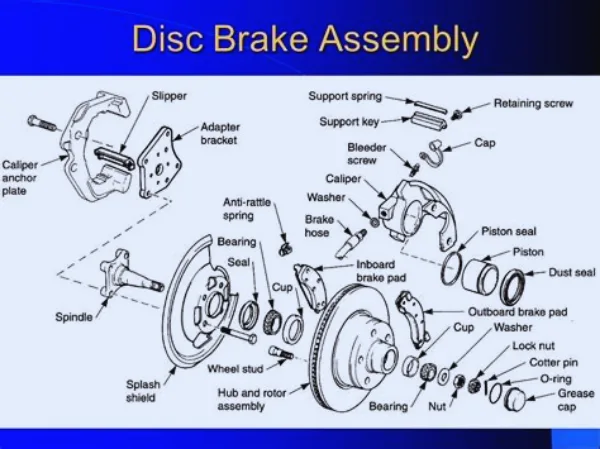
Parts of a Brake System showing disc brake components including rotor, caliper, and brake pads

Brake Rotors: Managing Heat and Stopping Force

Rotors provide the friction surface and absorb heat. Front rotors often use vented designs because they carry most braking load.

Installing new pads on worn or uneven rotors is a common shortcut—and a common source of noise and vibration. If thickness variation or heat spots are present, resurfacing or replacement is the correct fix. Skipping it saves time once and costs time later.

Brake Calipers: Clamping Force and Pad Control

Calipers clamp pads onto the rotor. Slide pins and piston movement must stay free.

When a vehicle pulls during braking and pad wear is uneven, stop cleaning and lubricating after the second attempt. A sticking piston or distorted bracket means replacement. Rebuilding rarely restores long-term reliability in high-mileage or heavy-use vehicles.

Brake Pads: Friction Materials That Wear by Design

Pads convert motion into heat. Ceramic pads suit daily driving. Semi-metallic pads tolerate higher load and temperature but generate more noise and dust, making them more common on heavier vehicles.

Mixing aggressive pads with marginal rotors or worn hardware is a fast way to create squeal complaints. Friction material choice must match rotor condition and vehicle duty cycle.

Drum Brake Systems: Durable Design for Rear-Axle Braking
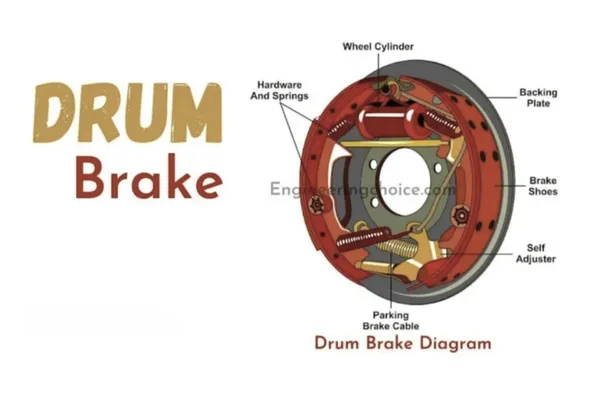
Parts of a Brake System diagram showing drum brake components such as brake shoes and wheel cylinder

Brake Drums: Enclosed Friction Surfaces

Drums protect internal components and provide strong braking force at lower cost. Heat dissipation is limited, which is why they’re typically used on rear axles.

Wheel Cylinders: Hydraulic Force Inside the Drum

Wheel cylinders push shoes outward. Seal leaks are not service items. If fluid is present, replace the cylinder. Rebuilding usually leads to repeat failure.

Brake Shoes: Curved Friction Under Load

Shoes last longer than pads but still wear. Uneven wear often traces back to weak return springs or sticking wheel cylinders—not the shoe material itself.

Electronic Assistance and Stability Control

ABS: Preventing Lockup While Maintaining Steering Control

Wheel speed sensors feed data to the ABS control module. When lockup is detected, pressure is modulated to maintain steering control.

An ABS warning light doesn’t disable base braking, but it removes a critical safety layer. On fleet vehicles, ignoring it increases loss-of-control risk during emergency stops.

Parking Brake: Mechanical Holding Outside the Hydraulic System

The parking brake operates independently of the hydraulic system. Cables and actuators seize over time, especially in harsh environments. A dragging parking brake can overheat rear brakes and mimic hydraulic faults.

Brake Warning Signs You Should Never Ignore

Pedal feel tells the truth faster than scan tools.

A soft or sinking pedal that doesn’t improve after bleeding usually points to a failing master cylinder. A hard pedal often indicates booster or vacuum issues. Hot-only pedal fade suggests fluid breakdown or localized overheating. Pulling during braking typically means a sticking caliper or restricted hose. Grinding noises mean the pads are gone and rotor damage is already happening.

Typical Brake Service Intervals and What Actually Matters

Service intervals vary, but patterns repeat.

Brake pads and shoes should be inspected regularly and replaced before metal contact. Rotors and drums should be evaluated for thickness and surface condition during every pad service. Brake fluid should be replaced on schedule to prevent heat-related failures. Annual system inspections catch imbalance before it becomes a safety issue.

From long-term vehicle maintenance experience, most repeat brake jobs come from partial repairs—not poor-quality parts.

FAQ

Are disc brakes better than drum brakes? Why use drums on the rear?
Disc brakes dissipate heat better and respond faster, which is why they’re commonly used on front axles. Drum brakes are enclosed, durable, and cost-effective. Since rear axles typically handle about 30% of braking force, drum brakes remain a practical and reliable solution.

Do rotors need replacement every time brake pads are changed?
Not always. Rotors should be measured for thickness, runout, and surface condition. If they remain within specifications and show no heat damage or vibration issues, they can stay in service. Rotors near minimum thickness or with uneven surfaces should be replaced or resurfaced.

What should I do if the brakes smell hot or start smoking?
Stop safely and allow the brakes to cool naturally. Avoid spraying water on hot components, as rapid cooling can warp rotors or crack drums. Repeated overheating usually indicates brake drag, misuse, or component imbalance and should be inspected promptly.

Can I inspect my brakes myself?
Basic checks are possible, such as pad thickness, brake fluid level, visible leaks, and unusual noises. However, hydraulic issues, caliper function, and internal wear require proper tools and experience. For accurate diagnosis and safe repairs, a professional inspection is recommended.

Why does brake fluid replacement require bleeding?
Bleeding removes trapped air from the hydraulic system. Air compresses under pressure, causing a soft or inconsistent pedal feel and reduced braking force. Proper bleeding restores firm pedal response and consistent pressure delivery across all wheels.

Final Thoughts: Systems Stop Cars — Not Individual Parts

A brake system doesn’t fail all at once. It drifts out of balance. Heat, wear, and mismatched components compound until symptoms show up at the pedal.

Scan tools assist the process, but judgment makes the call. In long-term vehicle service and parts supply at SUMATE, the biggest gains in safety and uptime come from correct diagnosis and reliable components—not shortcuts.

Tools help. Experienced technicians and quality parts finish the job.

What Is Brake Cleaner and Where to Use It – technician spraying brake cleaner on brake rotor
Previous
What Is Brake Cleaner and Where to Use It
Read More
What Happens When You Put Too Much Oil in the Car – mechanic checking overfilled engine oil level
Next
What Happens When You Put Too Much Oil in the Car
Read More