When that amber ABS light pops on, most drivers don’t feel anything different in the pedal. But in the shop, we know what it really means: the safety net behind your brakes just stepped out. The base brakes still stop the car. But the control you need during a panic stop? Gone.
And the light rarely comes on by accident. A sensor got noisy. A tone ring cracked. Fluid dropped. Power dipped. Something somewhere isn’t reporting what it should.
Here’s how a tech reads that light — and what each cause looks like in the bay.
ABS keeps the wheels from locking during a hard stop. That’s it. It doesn’t shorten stopping distance on dry pavement. What it does is let you steer when the road turns ugly.
You’ll feel the pedal kick or pulse when it steps in. That’s the system modulating pressure fast enough to keep a wheel moving instead of sliding.

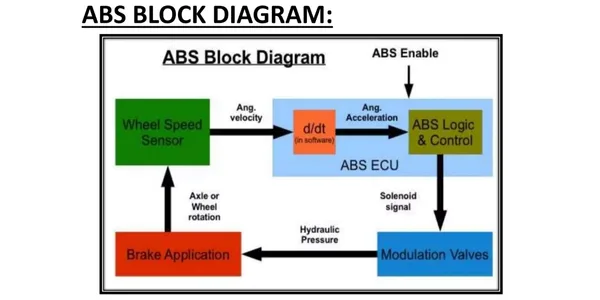
Each wheel has a speed sensor feeding the ABS brain. The moment one wheel shows a speed that doesn’t match the rest, ABS cuts pressure at that corner. Reapply. Release. Reapply. Multiple times per second.
When that data stream gets noisy, the system shuts down and hangs a warning light on the dash.
Solid light: The system logged a fault and disabled ABS.
Intermittent light: A sensor, harness, or tone ring is dropping in and out. Cold mornings and salty roads make this worse.
Either way, the system is telling you: “I can’t trust the numbers I’m seeing.”


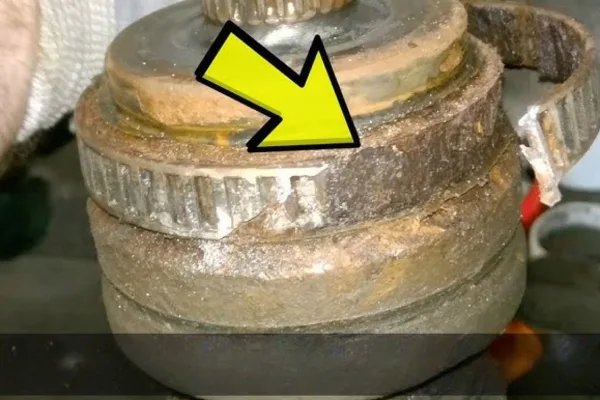
You see this all the time in winter states. Road salt builds rust under the tone ring. The ring swells. It cracks. A sensor that normally reads a clean square wave starts sending garbage.
One wheel’s live-data feed drops to zero on the scan tool.
ABS and traction control lights come on together — same data, shared logic.
On some cars, the speedometer glitches because the cluster borrows that sensor’s data.
Dirt or metal shavings stuck to the magnetic tip
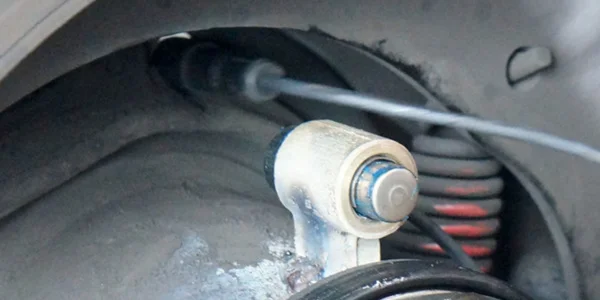
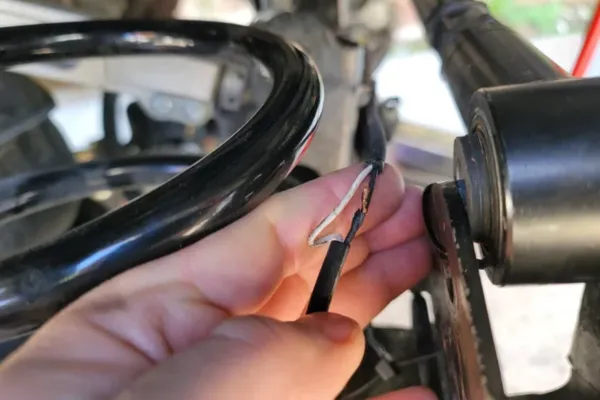
Corroded wiring right where the harness flexes at the knuckle
Broken or rust-jacked tone rings
Internal sensor failure
Clean the sensor and tone ring
Repair corroded connectors or replace the harness
Replace the sensor if the signal stays noisy
Replace the tone ring if cracked or out of round
Chain reaction:
Bad sensor → bad wheel speed data → ABS shuts down → traction control follows → warning cluster lights up.

When fluid drops, the system loses pressure. ABS sees that and throws a fault. Simple.
Pads wear → caliper pistons sit farther out → fluid stays in the caliper
A minor leak at a line or hose
Contaminated fluid absorbing moisture
Low or dirty fluid is one of the few issues you may feel: a soft pedal, delayed response, longer stops.
Red brake light sometimes joins the ABS light
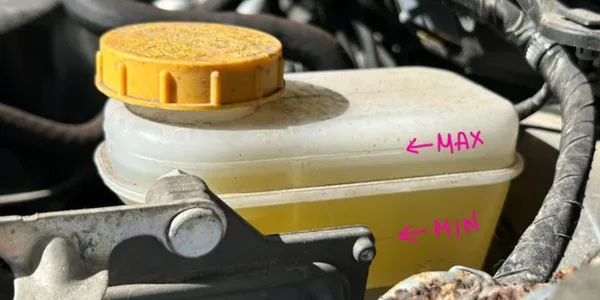
Fluid sits below MIN
Lines show damp spots or corrosion
Top up fluid (DOT3/4/5.1 depending on the car)
Find and repair leaks
Flush old fluid to protect valves and pumps
The ABS control module sits near heat, vibration, and moisture — three things that kill electronics.
ABS light stays on after every restart
Traction or stability lights join in
Scan tool shows codes like “no communication,” “module internal failure,” or “pump circuit fault”
Cracked solder joints
Water intrusion at connectors
Voltage drops from weak battery or poor ground
Verify power/ground
Repair wiring if the load test fails
Replace or reman the module, then program it

The system depends on clean power. A blown fuse or weak battery cuts the lights before the module even boots.
ABS light appears out of nowhere
System shows no response during a test drive
Multiple low-voltage codes stored
Blown ABS fuse
Shorting harness
Rodent-damaged wiring
Weak battery on cold mornings
Replace fuse with correct amperage
Track down shorts using load-probing
Repair or replace damaged harness
Test and replace battery if voltage sags under load
ABS depends on a healthy hydraulic system. When the mechanical side wears out, ABS feels the imbalance before the driver does.
Uneven pad wear
Warped rotors
Sticking calipers
Air in the hydraulic lines
Pump or valve body failure
Pedal pulses even at low speeds
One wheel shows delayed speed readings
Brake drag overheats a rotor and throws off sensor readings
Replace pads/rotors as needed
Free or replace sticking calipers
Bleed the system
Diagnose pump/valve issues if pressure doesn’t build
Add more following distance.
Brake earlier and smoother.
Avoid panic stops if possible.
Slow down in rain, snow, or gravel.
If the red brake light joins the ABS light?
Stop driving. That’s a hydraulic failure risk.
Restart the vehicle — clears temporary faults
Check fluid level
Inspect ABS fuse
Look for mud, rust, or debris around wheel sensors
Make sure ABS/traction control wasn’t manually disabled

This is the real workflow:
Pull ABS-specific codes — not every scanner can.
Compare live wheel-speed data while spinning wheels by hand.
Inspect tone rings for rust, cracks, or swelling.
Load-test wiring and grounds.
Check fluid and hydraulic pressure.
Repair, replace, reprogram as needed.
Clear codes and verify operation on a road test.
ABS failures often come from sensors, wiring, or hydraulics. But many of the deeper issues show up in vehicles already dealing with mechanical wear in other systems — belt drives, pulleys, tensioners, bearings, and cooling components.
At Suzhou Jiuneng Automotive Technology (SUMATE), our focus isn’t ABS modules. It’s long-term vehicle reliability. Quality components in the belt drive system reduce vibration, heat, and load fluctuations — all factors that indirectly affect electrical and hydraulic stability over a vehicle’s life.
When a vehicle is built on reliable parts, there are fewer comebacks, fewer warning lights, and a more predictable diagnostic path. That’s why professional technicians value consistent, durable components across the system — because one weak link can amplify faults everywhere else.
You can drive short distances if the red brake light isn’t on. But ABS won’t step in during a hard stop, so traction and steering control drop. Have the system checked soon.
The system detected a stored fault. Bad sensor data, low fluid, wiring issues, or a weak ABS module are common triggers. The system disables ABS until the issue is repaired.
Yes. ABS, traction control, and stability control rely on the same wheel-speed signals. When ABS stops reporting clean data, the other systems shut down for safety.
Costs depend on the fault: fuses are a few dollars, sensors run $50–$200, and ABS module repairs often range from $300–$800+. Wiring repairs vary based on severity.
Intermittent sensor signals, loose wiring, or early corrosion often cause dropouts. Cold weather makes marginal components worse. The light usually becomes constant over time.
A wheel-speed sensor sending weak or erratic data is the most common cause. Dirt, rust, or wiring fatigue at the hub often disrupts the signal and triggers the warning.
Base brakes still work because ABS is a separate assist system. The light means ABS is disabled, so you may lose steering control during a panic stop even if pedal feel seems normal.