Facebook

WELCOME TO OUR BLOG

We're sharing knowledge in the areas which fascinate us the most
click

Why Stabilizer Links Break and How to Prevent It

By Lucas December 25th, 2025 519 views

Why Stabilizer Links Break and How to Prevent It

Stabilizer links rarely fail without warning. Most of the time, they announce themselves with noise, looseness, or a subtle change in handling that experienced technicians recognize right away. The real challenge is not understanding what a stabilizer link does—it’s knowing when inspection is still worth the effort, and when replacement is the only decision that makes sense.

This article focuses on real-world failure patterns, diagnostic priorities, and replacement decisions that help technicians work faster, avoid repeat repairs, and keep suspension systems working as a system.

What a Stabilizer Link Actually Does in Real-World Driving

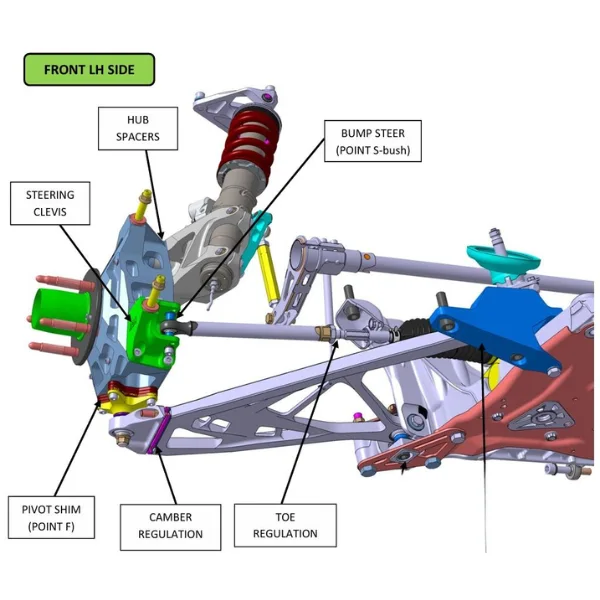
A stabilizer link, also known as a sway bar link, connects the stabilizer bar to the control arm or strut. On paper, its role is simple. In real driving conditions, it’s one of the most constantly loaded parts of the suspension.

It transfers side-to-side load during cornering, limits body roll under lateral force, and helps keep both tires evenly loaded so grip stays predictable. Structurally, it’s a slim steel rod with ball joints or bushings at both ends. Those joints articulate every time the suspension moves.

Because stabilizer links sit low, near the wheels, they’re exposed to road shock, moisture, corrosion, and constant motion. That combination is why they tend to wear out earlier than many larger suspension components.

On most vehicles, front stabilizer links connect the front stabilizer bar to the control arm or strut, while rear stabilizer links connect the rear bar to the rear control arm or suspension bracket.

Why Stabilizer Links Fail Before Other Suspension Parts

In real shop conditions, stabilizer link failures are rarely random. They follow predictable patterns.

Progressive wear is the most common cause. Ball joints and bushings wear gradually with mileage. Once a dust boot cracks, grease escapes and dirt and moisture get inside. From that point on, wear accelerates quickly. If the boot is torn, inspection time is usually over—replacement is the smarter move.

Repeated road shock is another major contributor. Potholes, speed bumps, curb strikes, and rough pavement load the link in directions it was never designed to absorb continuously. Urban vehicles see this pattern constantly.

Load stacking during cornering also plays a role. Overloading, towing, or frequent sharp turns increase lateral force. That force transfers directly through the stabilizer bar into the link, especially on the outside wheel. Bent rods and stretched joints often trace back to this condition.

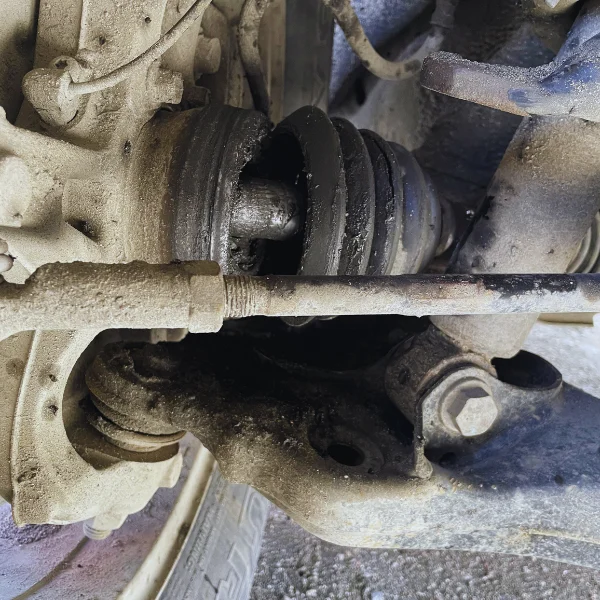
Corrosion weakens structure over time. Road salt and moisture don’t just seize hardware; they reduce metal strength. In cold or coastal regions, corrosion-related failures are common even when mileage isn’t extreme.
Why Stabilizer Links Break and How to Prevent It – worn and corroded stabilizer link failure

Improper installation shortens service life fast. Incorrect torque, locking the joint at the wrong ride height, or misaligned bushings preload the link from day one. That preload turns normal suspension movement into constant strain.

Material and design limitations also matter. Low-grade steel, weak coatings, or poor joint sealing reduce fatigue resistance. Once a joint loosens, noise and handling complaints follow quickly.

The Diagnostic Signals That Matter Most
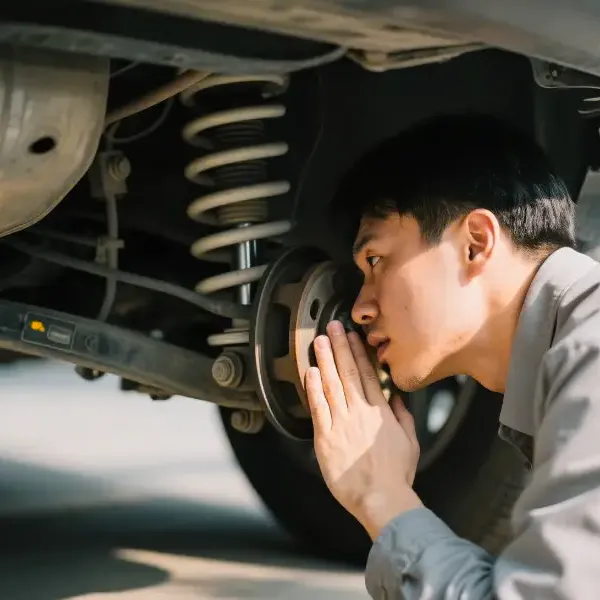
Why Stabilizer Links Break and How to Prevent It – diagnosing stabilizer link noise and joint play

Not all symptoms carry equal weight. Experienced technicians prioritize signals.

The earliest and most reliable sign is a low-speed clunk or rattle over small bumps. If the noise is repeatable, most noticeable at low speed, and fades on smooth highway driving, the stabilizer link should be one of the first components checked.

Noise that changes with steering input is another strong indicator. A clunk during light steering corrections or tight turns often points to a loose link joint and is commonly misdiagnosed as a control arm or ball joint issue.

Increased body roll without visible shock leakage suggests the stabilizer system is losing effectiveness, not the dampers. The vehicle may still control vertical motion but feel unstable in corners.

On rear stabilizer links, failure often shows up as a delayed or floating feeling rather than a sharp noise. The rear of the vehicle may feel disconnected from the front during transitions.

Uneven or cupped tire wear is usually a late-stage symptom. By the time tire wear is affected, the stabilizer link has likely been compromised for some time.

When a low-speed clunk is present and joint play is visible, replacing the link is usually faster and more reliable than extended inspection.

Preventing Failures That Lead to Comebacks

From a technician’s standpoint, prevention isn’t about changing how customers drive. It’s about intervening at the right time.

Early replacement makes sense when dust boots are torn or missing, joint looseness is visible by hand, noise complaints repeat after other suspension work, or the vehicle regularly carries heavy or shifting loads. Waiting for complete separation only increases the risk of secondary wear.

Certain vehicles and conditions see earlier failures more often. Urban delivery vehicles, fleet vehicles with constant loading, cold-climate vehicles exposed to road salt, and suspensions with limited link articulation are all higher-risk scenarios.

Stabilizer links should also be considered as part of a system. Worn stabilizer bar bushings, recent strut or control arm replacement, and advanced corrosion on one side all affect link life. Replacing only the link while ignoring worn bushings often leads to repeat noise complaints.

Replacement Decisions That Save Time and Repeat Repairs

Replacing stabilizer links in pairs on the same axle helps maintain balance and consistency. If one side has failed, the other is usually close behind.

Wheel alignment is usually not required unless control arms or steering components were removed. DIY replacement difficulty is moderate, but seized hardware is common on older or corroded vehicles.

A system check matters. A new link won’t stay quiet if surrounding components are already loose or worn.

Why Part Consistency Matters in the Real World

At SUMATE, years of producing load-bearing engine components like belt tensioners have reinforced a simple principle that applies equally to suspension parts: small components fail early when material quality and load consistency are overlooked.

Whether it’s a tensioner in a belt drive or a stabilizer link in a suspension system, durability comes from controlled material strength, consistent joint behavior, and predictable fatigue performance. Parts designed to survive real-world load cycles reduce comebacks in the bay.

FAQ

Can I drive with a broken stabilizer link?
Yes, but it’s not advisable. A broken stabilizer link reduces cornering stability and increases body roll, especially during turns or sudden maneuvers. While the vehicle may still be drivable short-term, continued driving increases handling risk and should be treated as a priority repair.

Does replacing stabilizer links require wheel alignment?
In most cases, no. Stabilizer link replacement does not alter suspension geometry. Alignment is only recommended if related components—such as control arms, tie rods, or subframe mounts—were loosened or replaced during the repair process.

How long do stabilizer links typically last?
Most stabilizer links last between 50,000 and 100,000 miles. Lifespan varies based on road conditions, vehicle load, driving habits, and part quality. Frequent rough roads, corrosion exposure, or heavy loads can shorten service life significantly.

Can I replace just one side?
It’s not recommended. If one stabilizer link has failed, the opposite side has usually experienced similar wear. Replacing both links on the same axle helps maintain balanced handling and reduces the risk of repeat noise complaints.

Is stabilizer link replacement DIY-friendly?
For experienced DIYers with proper tools, yes. However, seized or corroded fasteners are common and can complicate removal. Without experience handling suspension hardware, professional installation is the safer and more time-efficient option.

How do I confirm a stabilizer link is bad?
Listen for repeatable clunking over small bumps, especially at low speed. Inspect dust boots for tearing, check for visible joint looseness, and test for excessive play by hand. These signs together usually confirm stabilizer link failure.

Is a stabilizer link the same as a stabilizer bar?
No. The stabilizer bar connects the left and right sides of the suspension to limit body roll. The stabilizer link is the connecting component that transfers suspension movement to the stabilizer bar.

What causes stabilizer links to fail most often?
The most common causes are repeated road impacts, corrosion from moisture or road salt, vehicle overloading, and lack of inspection. Torn dust boots that allow contamination into the joint often accelerate failure.

OEM or aftermarket—which should I choose?
OEM parts offer exact fitment and predictable performance. Quality aftermarket options provide more flexibility in pricing and availability. Avoid low-grade links with poor sealing or weak materials, as they often lead to premature noise and failure.

What if noise remains after replacement?
If noise persists, inspect stabilizer bar bushings, control arm bushings, and nearby suspension joints. Stabilizer links work as part of a system, and replacing only one worn component may not eliminate noise caused by surrounding wear.

Fixing sticking brake calipers showing a brake caliper and rotor assembly
Previous
Fixing Sticking Brake Calipers: Causes, Symptoms, and Solutions
Read More
Parts of a car clutch system showing clutch disc, pressure plate, flywheel, and release components
Next
Parts of a Car Clutch System and How They Function
Read More