Facebook

WELCOME TO OUR BLOG

We're sharing knowledge in the areas which fascinate us the most
click

The Dangers of a Worn Strut Bearing: What It Means for Your Car

By Lucas February 11th, 2026 148 views

What Exactly Is a Strut Bearing?

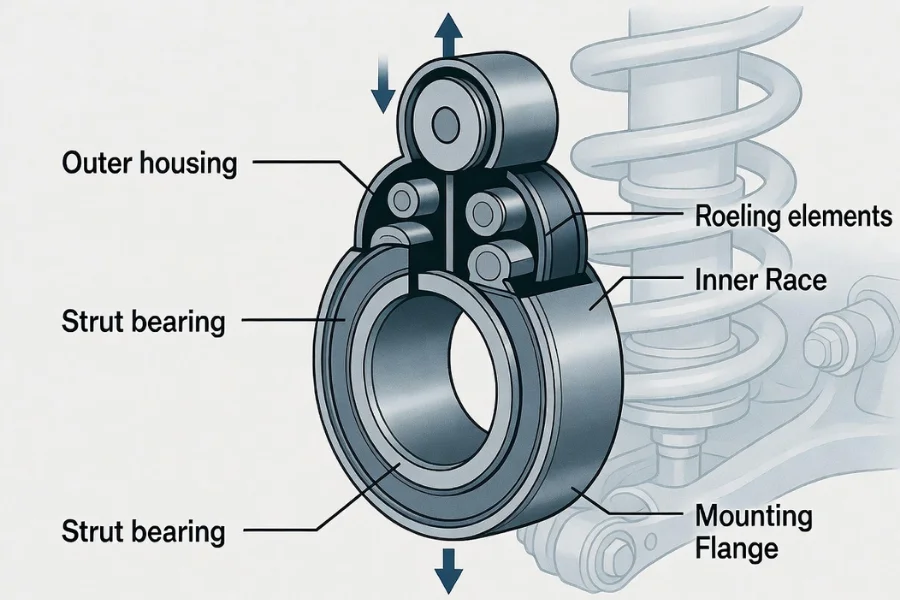
A strut bearing is a critical component located at the top of your vehicle's strut assembly. It's typically integrated into the strut mount and plays a key role in allowing smooth rotation when the steering wheel is turned.
Strut bearing diagram showing its role in the car's suspension and steering system, crucial for smooth steering and suspension performance.

Key Functions:

  • Rotation: It allows the strut to rotate smoothly when turning the steering wheel left or right, enabling precise steering control.

  • Support: The bearing helps support the weight of the vehicle, carrying axial load while maintaining proper wheel alignment.

  • Reducing Friction: It reduces friction within the suspension system, contributing to better handling and overall vehicle performance.

Difference Between a Strut and a Shock Absorber:

While both struts and shock absorbers are part of a vehicle’s suspension system, their roles differ:

  • Strut: Provides structural support for the vehicle and integrates a shock absorber and coil spring to absorb bumps and maintain wheel alignment. The strut bearing allows the strut to rotate during steering.

  • Shock Absorber: Primarily absorbs vertical shocks but does not provide the rotational motion needed for steering.

In modern MacPherson strut systems, the strut bearing is essential for smooth steering motion.

How to Spot a Worn Strut Bearing

A worn strut bearing can severely impact your vehicle’s performance, comfort, and safety. Here’s how to recognize the signs of wear:
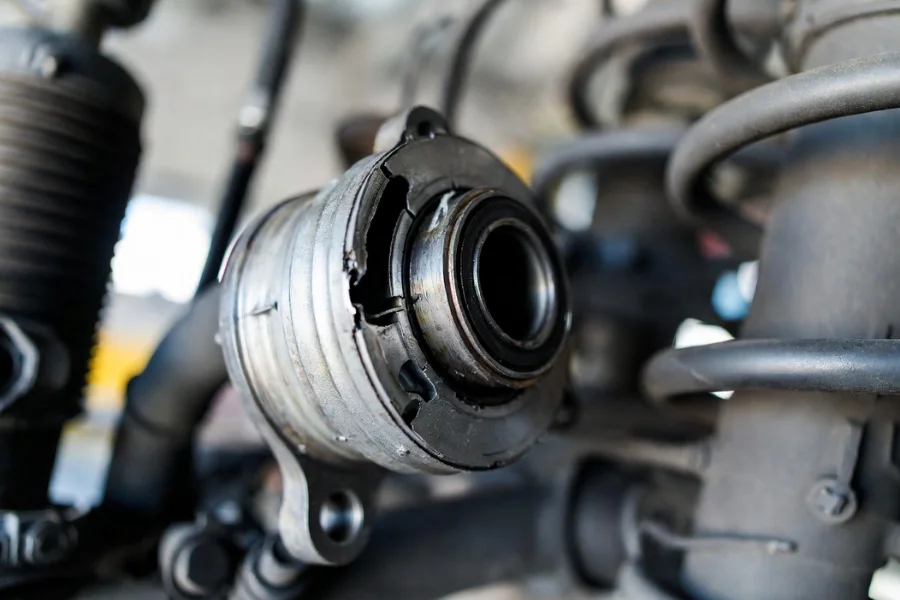
Worn strut bearing showing cracks and wear, contributing to steering issues, suspension problems, and unusual noises.

Noise Issues:

  • Clunking, Popping, or Clicking Sounds: If you hear unusual sounds like "clunking" or "popping" when turning the wheel or driving over bumps, the bearing could be worn.

  • Knocking or Rattling Over Rough Roads: The suspension may make noise when driving on uneven surfaces, indicating a problem with the bearing.

Steering Abnormalities:

  • Heavy or Jerky Steering: A worn bearing can cause the steering to feel stiff, hard to turn, or jerky when maneuvering the vehicle.

  • "Memory Steering": If the steering wheel doesn’t return to its center position after a turn, it could mean excessive friction in the bearing.

  • Vibration or "Notchiness": You might feel a rough sensation in the steering wheel, like sand in the gears, especially when turning.

Vehicle Handling Issues:

  • Increased Swaying or Bouncing: A worn bearing can cause the car to sway or bounce excessively over bumps.

  • Handling Problems in Turns: The vehicle may feel unstable during turns or cornering due to the compromised suspension.

Tire and Alignment Issues:

  • Uneven Tire Wear: The misalignment caused by a worn bearing can lead to rapid and uneven tire wear, particularly on the inner or outer edges.

  • Pulling or Steering Issues: The vehicle may pull to one side, or the steering wheel may feel off-center.

Visual Indicators:

  • Cracked or deformed rubber in the strut mount.

  • Excessive movement or binding of the strut assembly during steering.

Why a Worn Strut Bearing Is a Big Deal
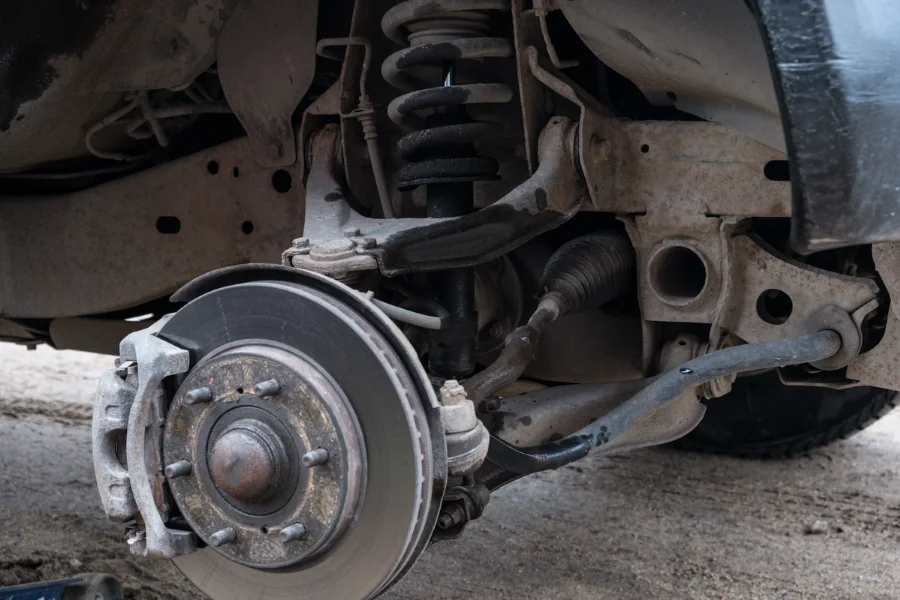
Unstable steering caused by worn strut bearings, showing how it compromises vehicle handling and safety.

Safety Risks:

Driving with a worn strut bearing can pose significant safety threats:

  • Steering Issues: Worn bearings can cause steering to become unresponsive or delayed, increasing the risk of accidents, particularly in emergency situations.

  • Coil Spring Failure: If the bearing fails, it can cause the coil spring to twist excessively, leading to a break. A broken spring could puncture the tire, leading to a loss of control.

  • Suspension Instability: A damaged bearing reduces overall suspension stability, affecting the vehicle’s handling, especially when braking or turning.

Additional Damage:

  • Accelerated Wear on Other Components: A worn bearing puts additional strain on other suspension parts, such as tie rods, ball joints, and the struts themselves, leading to more wear and costly repairs.

  • Tire Damage: Misalignment caused by the bearing’s failure can quickly ruin tires, increasing the frequency and cost of replacements.

Cost Implications:

Delaying repairs for a worn strut bearing will only lead to higher repair costs. In addition to replacing the bearing, you may also need to replace other suspension components, realign the wheels, and replace damaged tires.

How to Diagnose and Fix a Worn Strut Bearing

Diagnosis Methods:

If you suspect your strut bearing is worn, it’s essential to have it inspected by a professional. A qualified technician will check for excessive movement or seizing in the strut assembly, and listen for unusual sounds when turning the wheel.

Repair Recommendations:

  • Replace in Pairs: It’s advisable to replace both strut bearings at the same time to maintain suspension balance and consistency.

  • Full Component Replacement: It’s often best to replace the entire strut assembly, including the bearing, strut, and strut mount, to prevent future issues.

  • Use High-Quality Parts: Always opt for high-quality parts to avoid premature wear and ensure long-term performance. SUMATE offers reliable, durable strut bearings and suspension components that can help ensure the safety and performance of your vehicle.

  • Professional Installation: Replacing a strut bearing requires specialized tools, especially to handle the coil spring. It’s best left to professionals to ensure safety and accuracy.

Repair Process Overview:

  1. Remove the wheel and strut assembly.

  2. Use a spring compressor to safely release tension on the coil spring (this step requires professional tools).

  3. Replace the worn strut bearing and related components.

  4. Reinstall the strut assembly and perform a wheel alignment.

Frequently Asked Questions (FAQ)

Can I continue driving with a worn strut bearing?
No, it’s unsafe. A worn strut bearing can affect steering, cause suspension issues, and lead to dangerous handling problems. Immediate repairs are necessary.

How do I know if the noise is coming from the strut bearing?
If you hear clunking or popping sounds during low-speed turns or while driving over bumps, combined with steering difficulties, the strut bearing is likely the culprit.

How much does it cost to replace a strut bearing?
Parts usually cost $20–$50, but labor is the main expense, ranging from $150–$300 per side. Total repair costs typically range from $300 to $600, including alignment.

What are the symptoms of a bad strut bearing?
Symptoms include clunking sounds, difficulty turning the steering wheel, uneven tire wear, and poor ride quality. A rough or stiff steering wheel often indicates bearing failure.

Should I replace the strut bearing every time I replace the strut?
Yes, it's highly recommended. If the bearing is worn, replacing it will ensure the new strut performs effectively and lasts longer.

Prevention and Maintenance Tips

  • Regular Inspection: Have your suspension system checked regularly to catch issues early.

  • Driving Habits: Avoid aggressive driving, drive over speed bumps carefully, and don’t overload the car to reduce stress on the suspension.

  • Choose Quality Parts: Always use durable, high-quality replacement parts to ensure longevity and performance. SUMATE offers high-quality suspension components to keep your vehicle in top condition.

  • Timely Repairs: If you notice any symptoms of wear, get the issue checked and repaired as soon as possible to avoid further damage and higher repair costs.

Conclusion

A worn strut bearing poses serious risks to vehicle safety and performance. Timely repairs using high-quality parts like those offered by SUMATE and professional installation will ensure the longevity of your suspension system and prevent costly damage to other components. Keep your car running smoothly by addressing strut bearing issues early and maintaining your suspension system.
Brake disc showing wear and tear, essential for understanding when to replace your brake discs
Previous
When to Replace Your Brake Discs: Signs of Wear and Tear
Read More
DSG gearbox system: dual-clutch technology offering smooth and fast gear shifts for better performance and efficiency.
Next
DSG Gearbox: Meaning, Functionality, and Common Issues
Read More